
What is DJ Controller?
A DJ Controller is an electronic device used by DJs to control music software and perform live mixing. It is part of the broader family of MIDI Controllers in Music Electronics and plays an important role in the modern Music Industry. Instead of relying only on traditional turntables, CD players, or standalone mixers, a DJ Controller gives the performer a single hardware surface that can manage several functions at once. These functions may include loading tracks, adjusting tempo, matching beats, adding effects, scratching, looping, cueing, and controlling volume.
Basic idea: A DJ Controller acts as a physical interface between the DJ and digital music software. It allows the DJ to touch knobs, faders, jog wheels, pads, and buttons instead of using a computer keyboard and mouse. This makes performance more natural, musical, and expressive.
Practical use: Most DJ Controllers connect to a laptop, tablet, or other digital system through USB or other supported connections. The controller sends control data to DJ software, and the software responds by changing playback, effects, track position, and mixing settings.
Industry relevance: In the past, DJs often needed separate devices for playback and mixing. A DJ Controller combines many of these tasks into one compact system. Because of this, it has become a standard tool for beginners, mobile DJs, club performers, producers, and even live electronic artists.
Educational importance: Understanding a DJ Controller is important because it shows how digital technology has changed music performance. It combines hardware design, control systems, software integration, sound processing, and human creativity in one device.
How does DJ Controller Work?
A DJ Controller works by sending command signals from its physical controls to DJ software or an internal processing system. When a DJ moves a fader, turns a knob, presses a pad, or rotates a jog wheel, the controller converts that action into digital information. The connected software then interprets this information and carries out the requested task.
Signal flow: The controller itself usually does not store or create the music track in the same way as a synthesizer. Instead, it controls playback and mixing of audio files that are loaded in DJ software. The hardware tells the software what to do, and the software handles the playback and sound processing.
Control communication: Many DJ Controllers use MIDI or HID communication. MIDI is widely used for sending instructions such as play, stop, cue, pitch change, or effect adjustment. HID can allow higher resolution and more detailed communication between hardware and software in some professional systems.
Audio handling: Many controllers also include a built in audio interface. This means the device can send master output to speakers and cue output to headphones. The DJ can listen to the next track privately while the audience hears the current mix. This is essential in live performance.
Performance interaction: When the DJ loads two tracks, one on each deck, the controller helps manage both. The jog wheels can move track position, the tempo sliders can control speed, and the crossfader can blend one track into another. Pads can trigger hot cues, loops, samples, or special effects.
Software response: The software displays waveforms, tempo values, track libraries, effects sections, and other information. The controller gives hands on access to this software, making live work faster and more expressive.
Real world function: If a DJ wants to transition from one song to another, the controller can help beatmatch the songs, adjust equalization, reduce the bass on one track, and smoothly fade into the next track. This physical workflow is one of the main reasons DJ Controllers are so popular.
What are the Components of DJ Controller?
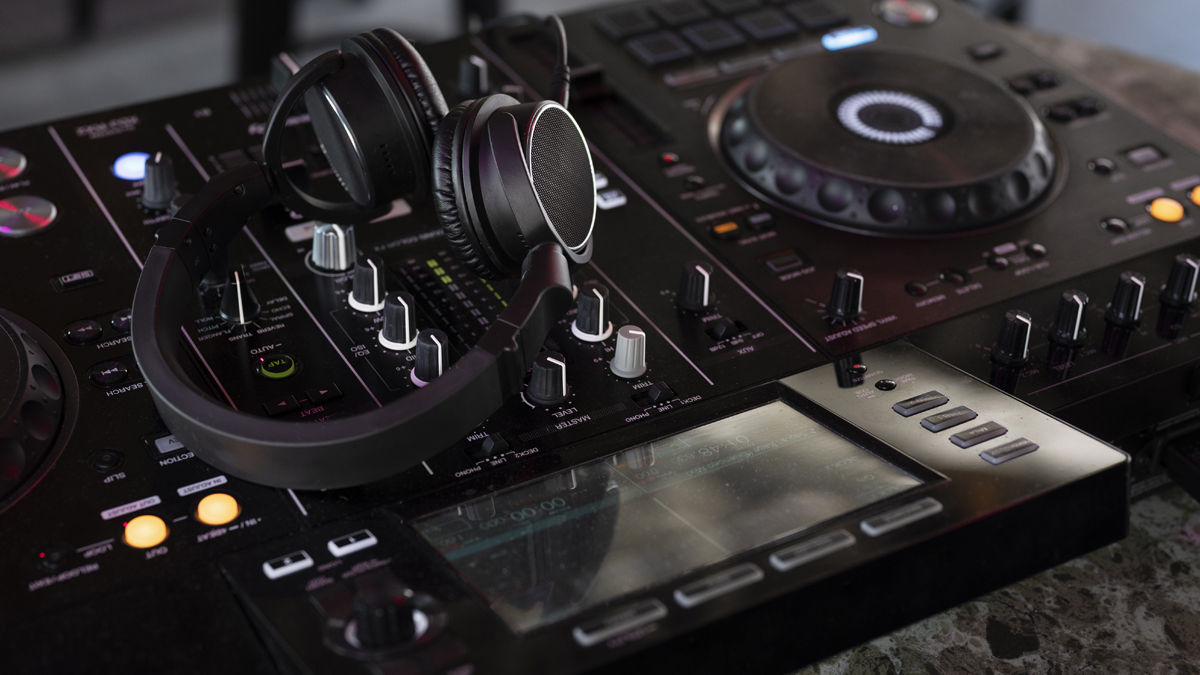
A DJ Controller contains several hardware components, each designed for a specific performance task. The exact layout varies by model, but most controllers share a common structure.
Jog wheels: Jog wheels are round touch sensitive controls used to scratch, nudge, search, or manipulate track position. They are one of the most recognizable parts of a DJ Controller and are especially useful for beatmatching and performance techniques.
Faders: Faders control levels and transitions. Channel faders adjust the volume of individual decks, while the crossfader blends between two channels. Tempo faders control playback speed and help align beats.
Knobs: Knobs are used for many settings such as equalization, gain, filter, and effects. DJs turn them to shape tone, balance frequencies, and add texture to the sound.
Performance pads: These pads trigger hot cues, loops, samples, slicer functions, and other creative features. They are common in modern controllers and give DJs fast access to performance tools.
Mixer section: The mixer section is the center of the controller. It usually includes channel strips, EQ controls, gain knobs, cue buttons, filter knobs, and a crossfader. This section allows the DJ to combine and shape multiple tracks.
Deck controls: Each deck section includes play, pause, cue, sync, and browsing controls. These are used to start, stop, prepare, and control tracks during performance.
Display elements: Some controllers rely on the computer screen, while others include built in screens for waveform views, track names, BPM, and library browsing. These displays improve efficiency and reduce dependency on the laptop display.
Audio interface: Many DJ Controllers have built in sound cards. These provide master output, booth output, headphone cue output, and sometimes microphone inputs. This makes the controller more practical for professional use.
Input and output ports: Common ports include USB, RCA, XLR, TRS, headphone jacks, and microphone inputs. More advanced units may have external deck inputs, MIDI outputs, or network support.
Build structure: The chassis, buttons, rubber pads, metal panels, and internal circuit boards all contribute to durability and usability. Since DJs often travel and perform in different environments, physical design matters greatly.
What are the Types of DJ Controller?
DJ Controllers come in different types based on size, features, intended users, and system design. Each type serves a different performance need.
Entry level DJ Controllers: These are designed for beginners and learners. They are usually compact, affordable, and easy to set up. They often include two decks, a basic mixer section, and essential performance controls. They are ideal for practice, home use, and learning core DJ skills.
Professional DJ Controllers: These are larger and more advanced. They include better jog wheels, more durable construction, expanded connectivity, and deeper software integration. Professional DJs use them for clubs, events, and touring.
Portable DJ Controllers: These are lightweight and travel friendly. They are useful for mobile DJs, small events, and performers who need a compact setup. Even though they are smaller, many portable models still provide quality features.
All in one DJ Controllers: These controllers can operate without a laptop in some cases. They may include onboard screens, internal processing, and standalone playback systems. They are popular among DJs who want a cleaner setup and more independence from a computer.
Software specific DJ Controllers: Some controllers are designed for a particular DJ software platform such as Serato DJ, Rekordbox, Traktor, or VirtualDJ. These units are optimized for specific workflows and offer tight integration.
Hybrid DJ Controllers: These combine controller functions with standalone mixer features, hardware inputs, or advanced performance tools. They are useful for DJs who mix digital and external sources together.
Controller for scratch performance: Some units are designed with responsive jog wheels, battle style layouts, and pad focused performance features for turntablists and open format DJs.
Four channel DJ Controllers: These support more decks and more complex mixing. They are useful for advanced performances, layering tracks, adding samples, and managing more elaborate sets.
What are the Applications of DJ Controller?
DJ Controllers are used in many areas of music performance, education, entertainment, and production support. Their flexibility makes them valuable across the Music Industry.
Live DJ performance: The most common application is live mixing at clubs, festivals, parties, weddings, and private events. DJs use controllers to create smooth transitions, build energy, and manage playlists in real time.
Mobile DJ work: Mobile DJs often perform at events where portability and fast setup are important. A DJ Controller is ideal because it combines several functions into one device and reduces the need for large equipment setups.
Broadcast and streaming: DJs use controllers for online radio, internet live streams, social media performances, and digital content creation. These controllers help manage polished sound and engaging live sets.
Practice and education: Students and beginners use DJ Controllers to learn beatmatching, track selection, cueing, looping, and mixing techniques. Music schools and training centers often include controllers in their curriculum.
Studio preparation: While a DJ Controller is mainly a performance tool, it can also be used in the studio to rehearse sets, test transitions, organize playlists, and prepare cue points before a live show.
Event entertainment: Hotels, restaurants, lounges, corporate events, and fashion shows may use DJs with controllers for professional music playback and atmosphere management.
Creative remixing: DJs can use controllers to trigger samples, add effects, rearrange song sections, and create live mashups. This turns the controller into a creative performance instrument, not just a playback system.
Collaboration with visuals: In some performances, DJs use controllers as part of multimedia shows, where music, lighting, and visuals work together. Controllers can help synchronize and shape live energy.
What is the Role of DJ Controller in Music Industry?
The DJ Controller has a major role in the Music Industry because it supports modern performance, accessibility, and innovation. It has changed how DJs learn, perform, and connect with audiences.
Democratization of DJing: DJ Controllers have made DJ performance more accessible. In the past, entry into DJing often required costly equipment. Controllers lowered this barrier and allowed more people to learn and participate.
Support for digital music culture: As music files and streaming based workflows became more common, DJ Controllers helped performers manage digital libraries efficiently. They became a bridge between music collections and live performance.
Professional performance tool: In clubs, concerts, and events, DJ Controllers allow DJs to perform with precision and speed. They support creative mixing, real time decision making, and audience engagement.
Growth of education and training: Because controllers are easier to access than traditional setups, they have expanded DJ education. Many aspiring artists begin with a controller before moving into advanced performance systems.
Technology development: DJ Controllers encourage innovation in software, user interface design, audio engineering, and performance techniques. Manufacturers compete by introducing better controls, screens, connectivity, and creative features.
Career opportunities: DJs who use controllers can work in live events, broadcasting, teaching, content creation, music promotion, and entertainment services. This increases the role of controllers in professional music careers.
Connection to music production: Many DJs are also producers. Since DJ Controllers belong to the broader category of MIDI based electronic control devices, they fit naturally into a workflow that includes production, remixing, and live electronic performance.
What are the Objectives of DJ Controller?
The objectives of a DJ Controller are related to control, creativity, efficiency, and live performance quality. It is designed to make digital DJing practical and expressive.
Performance control: One major objective is to give the DJ direct physical control over software functions. This improves speed and reduces dependence on a mouse and keyboard.
Mixing efficiency: A DJ Controller aims to make track blending easier through faders, EQ controls, cue systems, and tempo management. This supports smooth transitions between songs.
Creative expression: The controller allows DJs to go beyond simple playback. Pads, effects, loops, filters, and cue points help shape a unique performance style.
Portability: Another objective is to provide a compact solution that combines several functions in one device. This is important for mobile work and fast setup.
Skill development: For learners, the controller provides a structured way to practice timing, rhythm awareness, sound balance, and audience focused programming.
Software integration: The controller is designed to work efficiently with DJ software, turning digital systems into hands on performance tools.
Audience engagement: A well designed controller helps DJs focus more on performance and crowd interaction, instead of being limited by a complex or disconnected setup.
What are the Benefits of DJ Controller?
A DJ Controller offers many benefits for both beginners and professionals. Its value comes from convenience, flexibility, and creative control.
Ease of use: A controller simplifies access to important functions such as play, cue, sync, loop, and effects. This makes performance more manageable and intuitive.
Cost effectiveness: Compared to building a full traditional setup with multiple separate devices, a DJ Controller can be more affordable. This is especially useful for new DJs.
Compact design: Since many controllers combine deck controls, mixer functions, and audio interface features in one device, they save space and are easy to transport.
Hands on workflow: Physical controls allow faster and more musical interaction than clicking software menus. This improves performance flow and confidence.
Creative flexibility: Modern controllers provide performance pads, effects control, looping, sampling, and remix features. These expand the artistic possibilities of a set.
Learning support: Beginners can understand DJ structure more clearly when they use a controller. The layout visually teaches the relationship between decks, mixer, cueing, and transitions.
Better preparation: DJs can prepare tracks, set cue points, organize playlists, and rehearse performances using the same device they will later use live.
Professional output options: Many controllers provide balanced outputs, microphone support, headphone cueing, and strong software compatibility. This makes them suitable for serious work.
Adaptability: A DJ Controller can be used in home practice, event work, livestreams, studio sessions, and travel performance situations. This broad usefulness increases its value.
What are the Features of DJ Controller?
The features of a DJ Controller determine how powerful, flexible, and suitable it is for different users. While features vary across models, several are commonly important.
Dual or multiple deck control: Most controllers offer control over at least two decks, and advanced units may support four decks or more. This allows more complex mixing.
Jog wheel response: Good jog wheels provide accurate touch response for cueing, scratching, and track navigation. Size and feel are important performance factors.
Performance pads: These give access to hot cues, loops, roll, sampler, beat jump, slicer, and other functions. They are central to modern DJ creativity.
Built in mixer section: Controllers usually include EQ, gain, filter, and crossfader controls. This creates a complete mixing environment.
Integrated audio interface: Many units include sound output and headphone cueing. This reduces the need for external hardware.
Software integration: Controllers are often built to work closely with software platforms, offering mapped controls and efficient workflow.
Effects control: DJs can apply echo, reverb, filter, flanger, and other effects through knobs and buttons. This adds movement and character to the mix.
Library navigation: Browsing controls help search music collections, load tracks, and manage playlists quickly during performance.
Connectivity: Outputs for speakers, booth monitors, headphones, and microphones are common. Advanced controllers may also include external inputs and standalone features.
Build quality: Strong buttons, solid knobs, stable faders, and durable housing improve reliability. This matters in live event conditions.
Visual feedback: LEDs, screens, performance indicators, and waveform displays help the DJ stay informed during a set.
What are the Examples of DJ Controller?
There are many well known DJ Controllers available in the market, each aimed at a different type of user. The following examples show the diversity of this product category.
Pioneer DDJ FLX4: This is a beginner friendly controller known for ease of use, compact design, and software flexibility. It is widely recommended for new DJs.
Pioneer DDJ REV1: This model is designed for open format and scratch style performance. Its layout reflects battle inspired workflow.
Pioneer DDJ FLX10: This is a more advanced controller with professional features, strong software integration, and multi deck capability.
Numark Mixtrack Platinum FX: This controller is popular among learners and intermediate users because it offers useful performance features at an accessible level.
Hercules Inpulse 500: This controller is known for educational support, solid build, and practical live performance features for developing DJs.
Native Instruments Traktor Kontrol S4: This is a respected controller for users of the Traktor ecosystem. It offers deep software integration and creative performance control.
Roland DJ 202: This controller combines DJ functions with creative rhythm features and performance options that appeal to electronic music users.
Denon DJ Prime Go: This compact device is an example of a portable all in one DJ system with strong mobility and professional potential.
Purpose of examples: These examples show that DJ Controllers are made for different goals such as learning, portability, battle performance, club work, and software specific integration.
What is the Definition of DJ Controller?
The definition of DJ Controller can be explained as follows.
Technical definition: A DJ Controller is an electronic hardware interface that uses physical controls to operate DJ software or digital mixing systems for music playback, manipulation, and live performance.
Functional definition: It is a device that combines deck control, mixer control, and performance features in order to help a DJ mix and shape music in real time.
Educational definition: A DJ Controller is a practical tool that transforms digital DJing into a hands on activity by allowing the user to interact with tracks through buttons, knobs, pads, faders, and jog wheels.
Industry definition: In the context of Music Electronics and the Music Industry, a DJ Controller is a modern performance instrument that connects digital music libraries with live audience focused presentation.
What is the Meaning of DJ Controller?
The meaning of DJ Controller goes beyond its physical structure. It represents a shift in how music is performed and controlled in the digital age.
Literal meaning: The word DJ refers to a disc jockey, a person who selects and plays recorded music for an audience. The word Controller refers to a device that manages or directs functions. Together, DJ Controller means a device that helps a DJ control music performance.
Practical meaning: In practice, it means a simplified and efficient way to handle digital mixing. It gives the performer direct command over music playback and performance features.
Creative meaning: The DJ Controller is not only a machine for operating songs. It is also a creative instrument that allows expression, rhythm shaping, and audience interaction.
Technological meaning: It reflects how modern electronics and software have merged with live music performance. It shows how physical hardware can guide digital systems in a musical way.
Professional meaning: In professional use, the term means reliability, workflow efficiency, portability, and performance readiness.
What is the Future of DJ Controller?
The future of DJ Controller is closely connected to advances in music technology, digital performance, user interface design, and audience expectations. As technology evolves, controllers are likely to become even smarter, more integrated, and more flexible.
Smarter integration: Future controllers will likely offer deeper integration with DJ software, music libraries, cloud systems, and streaming platforms. This can improve access to tracks and set preparation.
More standalone capability: Many users want less dependence on laptops. Future controllers may continue moving toward standalone systems with powerful internal processing, advanced screens, and direct playback support.
Improved user feedback: Better touch surfaces, high resolution displays, and more detailed visual information may help DJs perform with greater speed and accuracy.
Artificial intelligence support: Intelligent assistance may help with track analysis, harmonic suggestions, set organization, or performance recommendations. However, human creativity will still remain central to DJ art.
Greater portability: Compact professional controllers may become more common, helping performers travel easily without losing quality or functionality.
Expanded performance features: Future devices may include more advanced sampling, stem control, live remix tools, and hybrid performance options that connect DJing with production.
Durability and design: Manufacturers are likely to continue improving build quality while also making devices visually cleaner and easier to use.
Educational growth: As DJ culture expands globally, controllers will remain important learning tools. More beginners will enter the field through affordable and educational models.
Industry evolution: The future of DJ Controller is strong because digital performance continues to grow in clubs, festivals, streaming, and content creation. As long as live music presentation evolves, DJ Controllers will remain important.
Summary
- A DJ Controller is an electronic device that helps DJs control music software and perform live mixing.
- It acts as a physical interface between the performer and digital audio systems.
- Common components include jog wheels, faders, knobs, pads, mixer controls, and audio outputs.
- DJ Controllers come in several types such as entry level, professional, portable, all in one, and software specific models.
- They are used in live performance, mobile events, education, streaming, studio preparation, and creative remixing.
- In the Music Industry, DJ Controllers have increased accessibility, innovation, and digital performance opportunities.
- Their objectives include performance control, mixing efficiency, portability, software integration, and creative expression.
- Major benefits include ease of use, cost effectiveness, compact design, and flexible workflow.
- Important features include multiple deck control, performance pads, built in mixer sections, effects, and integrated audio interfaces.
- Examples include models from Pioneer, Numark, Hercules, Native Instruments, Roland, and Denon DJ.
- The definition of DJ Controller focuses on its role as a hardware interface for digital DJ performance.
- The meaning of DJ Controller includes practical, creative, technological, and professional significance.
- The future of DJ Controller points toward smarter integration, more standalone capability, improved feedback, and broader creative tools.
- Overall, the DJ Controller is a vital device in modern Music Electronics and an essential part of the evolving Music Industry.

