

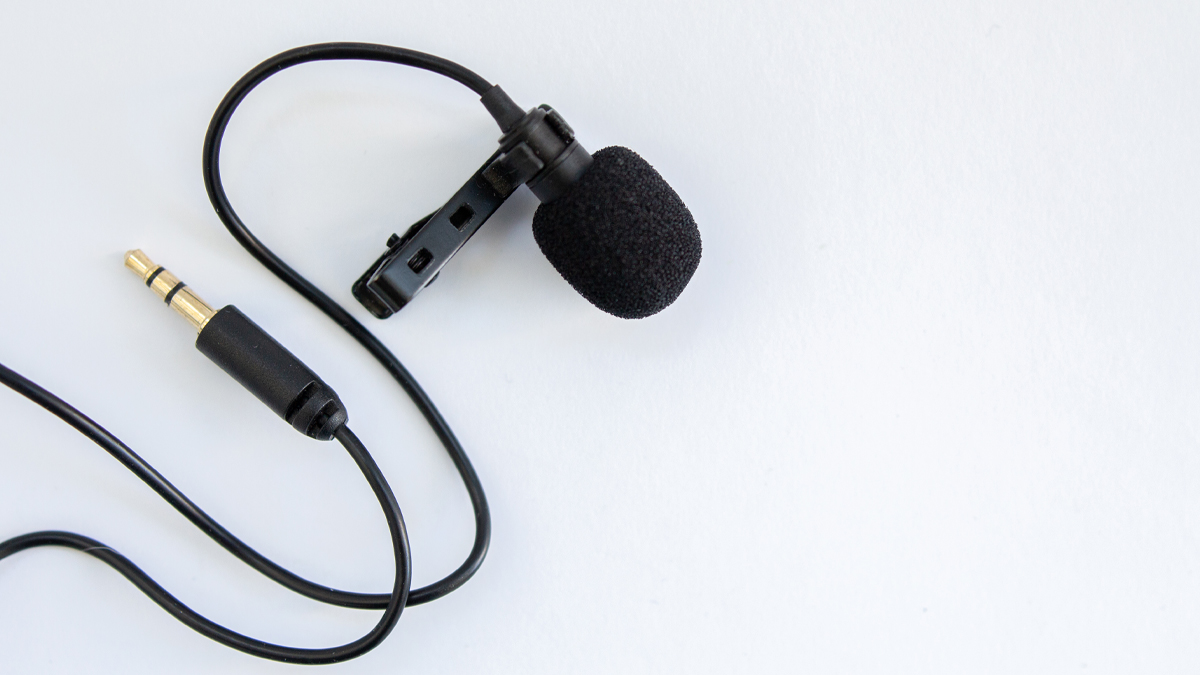
What is Lavalier Microphone?
A lavalier microphone is a small, wearable microphone designed to capture a person’s voice clearly while staying discreet and hands free. It is usually clipped to clothing such as a shirt collar, tie, jacket lapel, kurta placket, sari blouse edge, or dress neckline. Because of its small size and close placement to the mouth, it can pick up speech with good clarity even when the speaker is moving. This makes it especially useful in live presentations, interviews, stage performances, broadcasting, filmmaking, teaching, public speaking, and content creation.
A lavalier microphone is made to remain close to the speaker without needing to be held in the hand.
In the wider category of microphones, a lavalier microphone belongs to the miniature microphone family. Many models are condenser based because condenser capsules can be made very small and sensitive. Some lavalier microphones are wired directly to a recorder, mixer, smartphone adapter, or camera, while others connect to a wireless bodypack transmitter. The signal then travels to a receiver and finally into a recording or sound reinforcement system.
The main purpose of a lavalier microphone is to provide clean voice capture while allowing freedom of movement.
Lavalier microphones are common in the music industry, especially when performers, presenters, instructors, stage hosts, or theatre artists need their hands free. They are also widely used outside music, but their importance in music electronics is significant because they support stage communication, live production, rehearsals, educational demonstrations, and performance-based media.
How does Lavalier Microphone Work?
A lavalier microphone works by converting sound waves from the speaker’s voice into an electrical signal. When a person speaks, air pressure changes reach the microphone capsule. Inside the capsule, a diaphragm responds to those sound vibrations. This movement creates a corresponding electrical signal that represents the original sound.
Sound capture: The microphone diaphragm reacts to the incoming voice and transforms acoustic energy into electrical energy.
In many lavalier microphones, the capsule is based on an electret condenser design. This type of capsule uses a permanently charged material, which allows the microphone to work with a compact internal structure. Even though the capsule itself is pre charged, the microphone still often requires a small power source for the internal electronics. In wired systems, this power may come from plug in power, phantom power through an adapter, or a dedicated battery powered interface. In wireless systems, the power commonly comes from the bodypack transmitter.
Signal path: Voice enters the capsule, becomes an electrical signal, and is sent onward to a mixer, recorder, camera, or wireless system.
Placement is very important to how a lavalier microphone works in practice. Since the microphone is clipped near the chest area, it captures the voice from a short distance. This helps keep the sound more consistent than a distant microphone, especially when the speaker turns their head. However, placement can also affect tone. If the microphone is hidden under fabric or placed where clothing rubs against it, noise may be introduced. For that reason, engineers and performers often test placement carefully before recording or going live.
Performance behavior: Good placement improves clarity, while poor placement can create rustling, dullness, or uneven volume.
The electrical signal from the lavalier microphone is usually low level and must be amplified by a preamp. After preamplification, it may be processed with equalization, compression, noise reduction, gating, or feedback control depending on the application. In a live sound setting, the signal may go through a mixer to speakers or in ear monitors. In recording, it may go into an audio interface, field recorder, camera input, or digital recording system.
What are the Components of Lavalier Microphone?
A lavalier microphone consists of several important parts that work together to capture and deliver sound effectively. Even though the microphone appears simple from the outside, its design involves careful engineering.
Microphone capsule: The capsule is the heart of the lavalier microphone. It contains the diaphragm and the internal transducer system that converts sound into an electrical signal.
Diaphragm: This is the thin, sensitive membrane that moves in response to sound waves. In miniature microphones, the diaphragm must be very light and precise.
Housing: The housing is the small outer body that protects the capsule. It is designed to be lightweight, durable, and unobtrusive.
Clip or mounting accessory: The clip attaches the microphone to clothing. Some lavalier systems also include magnetic mounts, vampire clips, adhesive mounts, or concealment accessories for hidden placement.
Cable: In wired lavalier microphones, the cable carries the audio signal from the microphone to the connected device. It is usually thin, flexible, and reinforced for durability.
Connector: The connector links the microphone to a bodypack transmitter, recorder, mixer, smartphone adapter, camera adapter, or audio interface. Different brands may use different connector types.
Windscreen: A small foam windscreen helps reduce breath noise, wind noise, and light air movement. It can also soften harsh consonants in close speech.
Strain relief: This part helps protect the cable where it joins the microphone body. Since lavalier microphones are worn on the body, strain relief is important for long term reliability.
Power interface: Many lavalier microphones need a power source for their internal electronics. This may be supplied through a wireless transmitter, battery module, adapter, or powered input.
Protective grille: The grille covers the capsule opening and helps shield the diaphragm from dust, moisture, and physical contact.
Accessories: Additional items can include cable organizers, clips in different colors, moisture resistant caps, mounting tape, concealers, and adapter sleeves.
Functional design: Every component is made to balance sound quality, size, comfort, reliability, and ease of concealment.
What are the Types of Lavalier Microphone?
Lavalier microphones can be classified in several ways, including by connection method, pickup pattern, visibility, and intended use.
Wired lavalier microphone: A wired lavalier microphone connects directly to a recording or amplification device through a cable. It is often chosen when reliability and simplicity are more important than mobility. Wired models are common in studio voice capture, interviews, classrooms, and budget conscious setups.
Wireless lavalier microphone: A wireless lavalier microphone connects to a bodypack transmitter worn by the speaker. The signal is sent wirelessly to a receiver. This type is ideal for stage performance, television, public speaking, worship spaces, and filmmaking where movement is necessary.
Omnidirectional lavalier microphone: This type captures sound from all directions around the capsule. It is the most common design because it provides more consistent voice pickup even if the person turns their head. It also tends to be easier to place.
Cardioid lavalier microphone: This type focuses more on sound from the front and rejects some sound from the sides and rear. It can help reduce background noise in certain situations, but it usually needs more careful placement.
Visible lavalier microphone: In many interviews, presentations, and lectures, the microphone is clipped openly on clothing where it can be seen. This provides convenience and often gives the best sound.
Concealed lavalier microphone: In film, theatre, and television drama, the microphone may be hidden under clothing, in hair, or within costumes. This helps preserve visual aesthetics but requires skill to avoid fabric noise and muffling.
Broadcast lavalier microphone: These microphones are designed for speech intelligibility, dependable performance, and compatibility with professional wireless systems.
Theatre lavalier microphone: Theatre versions are often optimized for discreet placement, sweat resistance, and durability during movement.
Content creation lavalier microphone: These models may be designed for smartphones, cameras, or compact wireless systems used by vloggers, educators, and social media creators.
Use based categories: Different types exist because no single lavalier microphone suits every performance, recording, or production environment.
What are the Applications of Lavalier Microphone?
Lavalier microphones are used in many professional and educational settings because they provide mobility and close range voice capture.
Live presentations: Speakers at conferences, seminars, corporate events, trade shows, and educational workshops often use lavalier microphones so they can speak naturally while moving.
Broadcasting: News anchors, interview hosts, commentators, and panel participants frequently use lavalier microphones for a clean and discreet on screen setup.
Film and television production: Lavalier microphones are widely used in dialogue recording, especially when a boom microphone cannot get close enough or when actor movement is extensive.
Theatre and stage events: Performers, narrators, and presenters use lavalier microphones when clear voice reinforcement is needed without occupying the hands.
Worship and community events: Religious speakers, event coordinators, and singers may use lavalier microphones in live venues where hands free speaking is important.
Educational recording: Teachers, trainers, and online instructors use lavalier microphones for classroom teaching, webinars, and video courses.
Interviews and documentaries: Lavalier microphones are common in interview setups because they offer clear speech pickup and stay visually unobtrusive.
Fitness and movement instruction: Trainers and demonstrators use lavalier systems to speak while exercising, teaching dance, or guiding physical activities.
Music industry support work: In rehearsals, stage announcements, workshops, artist interviews, masterclasses, and backstage communication, lavalier microphones are highly useful.
Wide reach: Their applications extend from formal broadcasting to everyday content creation because they combine simplicity, mobility, and intelligibility.
What is the Role of Lavalier Microphone in Music Industry?
In the music industry, the lavalier microphone plays a support focused yet highly practical role. While it is not usually the first choice for capturing lead vocals in a studio recording session, it is extremely important in many surrounding activities that keep performances, productions, education, and artist communication running smoothly.
Stage communication: Hosts, emcees, music directors, presenters, and event coordinators often use lavalier microphones during concerts, award ceremonies, and music festivals.
Artist interviews: Musicians, producers, composers, and industry professionals are frequently recorded or amplified with lavalier microphones during interviews, press events, and promotional content.
Workshops and masterclasses: Music educators and guest artists use lavalier microphones to speak clearly while demonstrating instruments, conducting sessions, or moving around a stage or classroom.
Theatre and musical performance: In musical theatre and performance productions, lavalier microphones can reinforce spoken lines and some vocal passages while remaining visually subtle.
Behind the scenes production: Producers, directors, rehearsal leaders, and technical teams may use lavalier systems in production environments where clear communication is essential.
Media integration: Modern music industry activity includes video content, livestreams, documentaries, podcasts, teaching platforms, and social media. Lavalier microphones help artists and professionals speak clearly in these formats.
Professional value: The lavalier microphone supports the communication, education, and media side of the music industry with efficiency and flexibility.
What are the Objectives of Lavalier Microphone?
The objective of a lavalier microphone is not only to record sound but to do so in a way that matches modern performance and communication needs.
Hands free operation: One major objective is to allow the speaker or performer to use both hands freely.
Consistent voice capture: Because the microphone stays attached to the body, it helps maintain a more stable distance from the mouth than a handheld microphone.
Discreet appearance: Another objective is to remain small and visually unobtrusive, especially in video, theatre, broadcasting, and formal presentations.
Mobility: Lavalier microphones are designed to let users walk, turn, gesture, teach, perform, or demonstrate without losing audio coverage.
Speech intelligibility: Clear spoken word reproduction is one of the main goals, particularly in lectures, interviews, and live events.
Ease of integration: Many lavalier microphones are made to connect easily with wireless systems, cameras, mixers, recorders, and mobile devices.
Audience comfort: By avoiding a large visible microphone and freeing the speaker from holding equipment, the lavalier microphone can create a more natural presentation style.
Core objective: It aims to make voice capture practical, clear, and unobtrusive in dynamic real world situations.
What are the Benefits of Lavalier Microphone?
Lavalier microphones offer many benefits that explain their popularity in media, education, public speaking, and performance settings.
Freedom of movement: Users can move naturally without being restricted by a handheld microphone.
Hands free convenience: This is especially useful for instructors, presenters, worship leaders, interview guests, and performers who need to gesture or handle instruments and materials.
Small and discreet form: Their compact size helps maintain a clean visual appearance in front of audiences and cameras.
Good speech clarity: When placed correctly, a lavalier microphone can produce clear and intelligible speech because it stays relatively close to the mouth.
Professional appearance: A presenter using a lavalier microphone often appears more open, natural, and less obstructed on stage or on screen.
Flexible application: Lavalier microphones work across live sound, recording, film, teaching, streaming, and corporate communication.
Compatible with wireless systems: This adds mobility and makes them ideal for active presentations or stage movement.
Reduced handling noise: Since the microphone is clipped in place rather than held in the hand, it avoids many noises caused by touching and repositioning a handheld microphone.
Strong advantage: The lavalier microphone combines comfort, practicality, and speech focused performance in a very compact device.
What are the Features of Lavalier Microphone?
Lavalier microphones include a range of features that make them suitable for wearable voice capture.
Miniature size: Their small size is one of their defining features.
Lightweight build: A lavalier microphone is designed to be comfortable for extended use.
Clip based attachment: Most models include a clip for easy placement on clothing.
Close speech pickup: Since the microphone sits near the chest or neckline, it is optimized for nearby voice capture.
Wireless compatibility: Many lavalier microphones are built for connection to wireless bodypack transmitters.
Speech oriented frequency response: Some models are tuned to emphasize vocal intelligibility.
Replaceable accessories: Windscreens, clips, cable holders, and concealment mounts are often included or available separately.
Durable cable design: The cable is usually made thin enough to be discreet but strong enough to handle repeated use.
Low visibility: Many lavalier microphones are available in different colors such as black, beige, brown, or white to match clothing or skin tones.
Application aware design: Their features are focused on mobility, wearability, and clean spoken word reproduction.
What are the Examples of Lavalier Microphone?
There are many well known lavalier microphone examples used in professional and semi professional environments. Some are recognized for broadcast quality, some for theatre use, and some for content creation.
Professional examples: DPA miniature lavalier models, Sanken COS series lavaliers, Countryman lavalier microphones, Shure lavalier systems, Sennheiser lavalier options, Audio Technica miniature lavaliers, and Rode Lavalier series are widely known.
Wireless system combinations: A lavalier microphone is often used as part of a larger system such as a Shure wireless setup, a Sennheiser wireless bodypack system, or a compact creator wireless kit.
Entry level examples: Budget friendly lavalier microphones for smartphones, cameras, and laptops are commonly used by students, teachers, and new creators.
Use case variety: Some examples are built for hidden placement in film, some for visible stage use, and others for simple direct connection to mobile devices.
These examples show that the lavalier microphone category includes everything from affordable learning tools to premium professional equipment.
What is the Definition of Lavalier Microphone?
A lavalier microphone is defined as a small microphone intended to be attached to a person’s clothing or body for hands free voice capture. It is usually positioned near the chest or collar area and is commonly used in broadcasting, presentations, theatre, interviews, education, and video production.
Formal definition: It is a wearable, compact microphone created to capture speech clearly while allowing the user to move freely.
This definition highlights the key ideas of size, wearability, and practical communication use. Unlike large studio microphones or handheld stage microphones, the lavalier microphone is meant to become part of the speaker’s outfit or presentation setup.
What is the Meaning of Lavalier Microphone?
The meaning of lavalier microphone goes beyond the technical definition. In practical terms, it means a microphone that supports natural communication without forcing the speaker to hold equipment or remain fixed in one place.
Simple meaning: It means a small clip on microphone that lets a person speak freely and comfortably.
In production language, the term often suggests convenience, mobility, discretion, and speech focused sound capture. In professional environments, it also implies preparation, placement skill, signal management, and an understanding of how wearable microphones behave in different acoustic spaces.
Industry meaning: Within music electronics and audio production, it represents a compact solution for close range spoken word amplification and recording.
What is the Future of Lavalier Microphone?
The future of the lavalier microphone is strong because wearable audio remains important in live events, media production, education, remote communication, and creator driven content. As technology advances, lavalier microphones are likely to become even smaller, smarter, and more adaptable.
Miniaturization: Future models will likely continue to become smaller and easier to hide while preserving or improving sound quality.
Wireless development: Improvements in wireless transmission, frequency management, low latency operation, and interference resistance will make lavalier systems more reliable.
Better connectivity: More lavalier microphones will be designed for direct use with smartphones, tablets, cameras, computers, and cloud-based recording systems.
Improved sound processing: Built in digital signal processing may help reduce noise, manage clipping, improve speech intelligibility, and simplify setup for non technical users.
Battery and power efficiency: Wireless lavalier systems are likely to gain longer battery life and more efficient charging options.
Durability and moisture resistance: Since wearable microphones face sweat, motion, and outdoor conditions, future designs will continue to improve in ruggedness.
Growing relevance: As online education, livestreaming, documentary production, creator media, and hybrid events expand, the lavalier microphone will remain highly relevant.
In the music industry, this future is especially meaningful because artists, educators, hosts, promoters, and production teams increasingly work across both live and digital platforms. A microphone that supports mobility and clear communication will continue to have lasting value.
Summary
- A lavalier microphone is a small wearable microphone designed for hands free voice capture.
- It is usually clipped to clothing near the chest or collar area.
- Most lavalier microphones use compact condenser based technology, especially electret condenser designs.
- It works by converting sound waves from the speaker’s voice into an electrical signal.
- Important components include the capsule, diaphragm, housing, clip, cable, connector, windscreen, and power interface.
- Common types include wired, wireless, omnidirectional, cardioid, visible, and concealed lavalier microphones.
- Lavalier microphones are used in broadcasting, interviews, film, theatre, education, live presentations, and content creation.
- In the music industry, they support stage hosting, workshops, interviews, rehearsals, media production, and musical theatre.
- Their objectives include mobility, discreet appearance, speech clarity, and hands free use.
- Their benefits include convenience, consistent pickup, reduced handling noise, and professional presentation.
- Key features include miniature size, lightweight design, clip based mounting, and wireless compatibility.
- Examples include professional miniature microphones from brands such as DPA, Sanken, Countryman, Shure, Sennheiser, Audio Technica, and Rode.
- The definition of lavalier microphone focuses on its wearable and speech oriented design.
- The meaning of lavalier microphone reflects freedom, practicality, and natural communication.
- The future of lavalier microphones includes smaller designs, better wireless performance, stronger connectivity, and smarter sound processing.

