

What is Pedalboard?
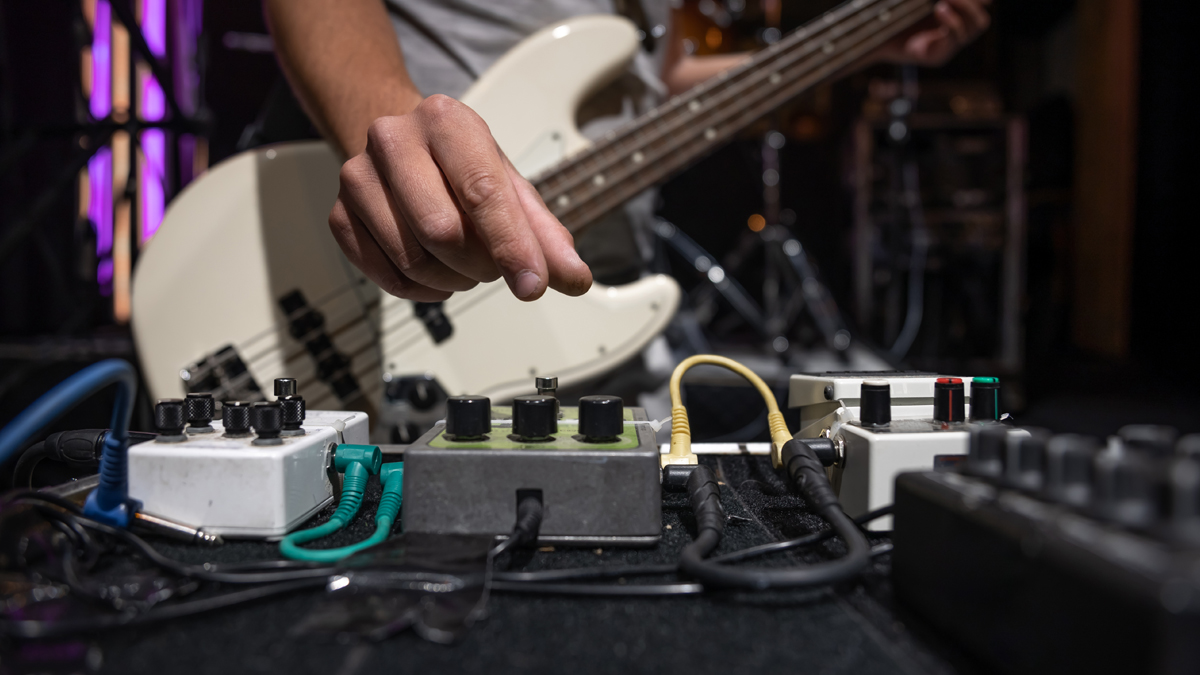
Pedalboard is a platform or mounting system used to organize, power, connect, and transport multiple effects pedals in one practical unit. In the context of music electronics and the music industry, a pedalboard is most associated with guitarists, bassists, keyboard players, and some electronic musicians who use external effects units to shape sound. Instead of placing individual pedals loosely on the floor, a pedalboard gives the musician a structured surface where pedals are fixed in place and arranged for easy access during practice, recording, and live performance.
Basic idea: A pedalboard acts as the control center for a musician who uses several effects units. These effects may include distortion, overdrive, reverb, delay, chorus, compression, equalization, looper functions, and many other sound processing tools. The pedalboard helps keep these devices connected in a consistent signal chain so that the musician can achieve a reliable tone every time.
Practical purpose: Pedalboards solve several common problems. Without one, pedals can move during performance, cables can become tangled, and setup time can increase. A pedalboard keeps the system neat, reduces confusion, and makes it easier to carry equipment from one place to another.
Modern relevance: Today, pedalboards range from simple flat boards for a few pedals to large professional systems with power supplies, switchers, wireless receivers, MIDI controllers, and protective flight cases. As sound design in modern music has become more advanced, the pedalboard has evolved from a convenience item into an important creative and technical tool.
How does Pedalboard Work?
A pedalboard works by providing a fixed layout for multiple effects pedals and the supporting electronics needed to run them together as one system. The musician sends an instrument signal, usually from a guitar or bass, into the first pedal on the board. That signal then moves through the connected pedals in a chosen order before reaching an amplifier, recording interface, mixer, or sound system.
Signal flow: The most important principle behind pedalboard operation is signal chain order. Each pedal affects the sound that enters it. For example, a compressor placed early in the chain will shape the clean instrument signal, while a delay placed later will repeat the already processed tone. The order of pedals strongly influences the final sound.
Power distribution: Most pedalboards include a dedicated power supply that sends the correct voltage and current to each pedal. This is important because different pedals may require different power conditions. A stable power source reduces noise, improves reliability, and prevents damage to effects units.
Connectivity: Patch cables connect one pedal output to the next pedal input. These short cables allow the signal to move between pedals with minimal clutter. Many pedalboards also include input and output jacks mounted on the side, which makes setup faster and more professional.
Control during performance: Once arranged, the musician can activate or deactivate individual pedals by stepping on their footswitches. Some advanced pedalboards also use loop switchers, which let the player turn on several effects at once or change entire sound presets with a single press. This improves stage efficiency and reduces mistakes during performance.
Consistency: One of the biggest advantages of how a pedalboard works is repeatability. When the board is wired once and kept intact, the same setup can be used again and again with minimal adjustment. This is especially valuable in touring, studio work, and professional sessions.
What are the Components of Pedalboard?
A pedalboard is made up of several physical and electronic components that work together to support effects units and create a complete signal system.
Board frame: The frame is the physical base on which the pedals are mounted. It may be made of aluminum, wood, steel, or composite materials. The frame determines the size, weight, and portability of the board.
Effects pedals: These are the main sound processing units placed on the board. Common pedals include tuner, wah, overdrive, distortion, fuzz, modulation, delay, reverb, equalizer, compressor, and looper. Each pedal performs a specific audio function.
Mounting material: Velcro style fasteners, dual lock tape, brackets, and zip ties are commonly used to attach pedals securely to the board. This prevents movement while allowing changes when needed.
Patch cables: These short audio cables connect the pedals together. Good patch cables are important because poor cable quality can introduce noise, signal loss, or reliability problems.
Power supply unit: A pedalboard often contains a multi output power supply that provides clean and isolated power to the pedals. Isolated outputs are especially useful because they reduce hum and interference between pedals.
Power cables: These cables run from the power supply to each pedal. They must match the voltage and connector type required by each unit.
Input and output connections: Some pedalboards include mounted jack panels so the musician can connect the instrument and amplifier without reaching into the middle of the board. This makes setup cleaner and faster.
Loop switcher or controller: Advanced pedalboards may include switching systems that route pedals in or out of the signal path. MIDI controllers can also be added to manage digital pedals or amplifiers with preset based control.
Case or bag: Since pedalboards are often transported, many are sold with soft carrying bags or hard cases for protection during travel.
What are the Types of Pedalboard?
Pedalboards come in different forms based on size, design, complexity, and intended use.
Small pedalboards: These are compact boards designed for a few essential pedals. They are popular with beginners, minimalist players, and musicians who need portability. A small board may include only a tuner, an overdrive, a modulation effect, and a delay.
Medium pedalboards: These offer more space for a broader range of effects and are common among active performers. They balance flexibility and portability, making them suitable for rehearsals, local shows, and studio work.
Large professional pedalboards: These are used by touring musicians and studio professionals who need extensive control. They may contain many pedals, switching systems, multiple power zones, MIDI control, and custom wiring.
Flat pedalboards: These boards have a simple flat surface. They are easy to build and customize but may provide less space underneath for hidden cables and power supplies.
Angled pedalboards: These are designed with a sloped surface. The raised rear section makes back row pedals easier to reach and may provide extra room underneath for power management.
Custom built pedalboards: Some musicians create their own boards based on specific technical and artistic needs. A custom board can be shaped for exact pedal dimensions, special routing, and unique performance requirements.
Integrated switching pedalboards: These boards are designed around loop switchers and programmable control systems. They are ideal for musicians who need fast sound changes during complex performances.
Travel pedalboards: These prioritize lightweight construction and durability. They are intended for musicians who move frequently between rehearsals, venues, and recording sessions.
What are the Applications of Pedalboard?
Pedalboards are used in many practical and creative situations across music performance and production.
Live performance: This is one of the most common applications. On stage, a pedalboard lets the musician switch between tones quickly and reliably. Clean rhythm, lead distortion, ambient textures, and solo boosts can all be accessed in real time.
Studio recording: In the studio, a pedalboard helps create controlled and repeatable tones. Engineers and musicians can quickly test combinations of effects and maintain the same signal path across multiple recording sessions.
Practice and rehearsal: Pedalboards make rehearsal more efficient because the sound setup remains organized. A musician can focus on playing instead of reconnecting loose pedals each time.
Touring: Touring musicians depend on pedalboards because they reduce setup time and protect the reliability of the signal chain. A prewired board helps the artist maintain a consistent sound from venue to venue.
Sound design: Pedalboards are valuable for experimental music, film scoring, ambient music, and electronic performance. By combining multiple effects, musicians can build unusual textures, loops, and evolving soundscapes.
Instrument expansion: While commonly used with guitars and basses, pedalboards are also used with synthesizers, electric violins, microphones, drum machines, and even studio outboard routing in some cases.
Educational use: Music schools, production courses, and audio training programs use pedalboards to teach signal flow, sound shaping, and performance techniques in a clear and practical manner.
What is the Role of Pedalboard in Music Industry?
Pedalboard plays a meaningful role in the music industry because it supports performance quality, creative expression, production efficiency, and equipment standardization.
Performance support: In professional live settings, a pedalboard allows musicians to deliver dependable sound changes under pressure. This is essential in concerts, theater productions, worship music, session work, and broadcast performances.
Creative identity: Many artists develop a signature tone through carefully selected effects and pedal order. The pedalboard becomes a physical representation of that sound identity. In this sense, it is not only a tool for convenience but also a key part of artistic branding.
Technical standardization: In the music industry, reliability matters. A consistent pedalboard setup helps musicians, technicians, and backline crews work more effectively. Standardized wiring and layout reduce technical errors and simplify troubleshooting.
Product ecosystem: Pedalboards also support the business side of music electronics. They create demand for effects pedals, power supplies, patch cables, cases, controllers, and accessories. Manufacturers across the music industry design products specifically to fit into pedalboard systems.
Session and touring efficiency: For hired musicians and touring professionals, time and consistency are highly valuable. A pedalboard makes it easier to walk into a studio or venue with a complete and proven tone system ready to use.
Innovation driver: As music technology evolves, pedalboards encourage the integration of analog and digital tools. Modern systems often combine classic stompboxes with MIDI devices, digital modelers, amp simulators, and software controlled gear, reflecting the broader direction of the music industry.
What are the Objectives of Pedalboard?
The objectives of a pedalboard go beyond simply holding pedals in place. It is designed to meet practical, creative, and technical goals.
Organization: One major objective is to keep effects units arranged in a clean and logical format. This helps the musician see the full system clearly and operate it with confidence.
Signal management: A pedalboard is meant to support a stable signal path. Proper routing reduces cable clutter, limits accidental disconnections, and improves overall sound integrity.
Ease of use: Another objective is to make effect switching easier during performance. Pedals are placed within foot reach and can be grouped according to the musicians needs.
Portability: Pedalboards are designed so that an entire effects setup can be transported as one item rather than as many separate devices.
Protection: By mounting pedals securely and placing them in a bag or case, a pedalboard helps protect expensive electronics from impact, movement, and wear.
Consistency of tone: A fixed setup ensures that the same combination of pedals and connections can be used repeatedly, which helps preserve a consistent tone across different locations and sessions.
Efficiency: Setup and teardown become faster. This is especially important for gigging musicians, session players, and technical crews who work under time constraints.
What are the Benefits of Pedalboard?
Pedalboards provide a wide range of benefits to musicians, technicians, and producers.
Better organization: A pedalboard turns many loose devices into one clear system. This reduces confusion and improves workflow.
Faster setup: Since the pedals remain wired together, the musician can connect the instrument and amplifier quickly. This saves time before and after performances.
Improved reliability: Secure pedals, proper power distribution, and managed cables reduce the chance of failure during critical moments.
Cleaner stage appearance: A tidy pedalboard looks more professional and helps reduce stage clutter. This is valuable in live performance where visual presentation matters.
Reduced cable problems: Short patch cables and structured routing help prevent tangling and accidental unplugging.
Noise reduction: A good pedalboard with a quality isolated power supply can reduce unwanted hum and interference, resulting in a cleaner audio signal.
Creative freedom: When multiple effects are easily accessible, the musician can experiment more freely with tone combinations and performance dynamics.
Physical convenience: Instead of carrying separate pedals one by one, the musician transports one organized board. This is easier and safer.
Scalability: Pedalboards can grow with the musicians needs. New pedals and controllers can be added over time.
Professional workflow: For serious musicians, a pedalboard supports disciplined sound management and helps bridge the gap between casual playing and professional performance.
What are the Features of Pedalboard?
Pedalboards are defined by several features that make them useful in music electronics applications.
Structured layout: Most pedalboards are designed with a surface that supports clear pedal placement and efficient access.
Cable routing options: Many boards include slots or spaces that allow patch cables and power leads to pass underneath or through the frame, creating a cleaner setup.
Power integration: A common feature is compatibility with mounted power supplies, which keeps the system neat and reliable.
Portability support: Lightweight construction, handles, bags, and cases are important features for musicians who travel.
Durability: Good pedalboards are built to withstand repeated use, foot pressure, and transportation.
Modular capacity: Some pedalboards are designed to adapt easily as the musician changes pedal combinations or expands the system.
Compatibility with accessories: Advanced boards support loop switchers, volume pedals, expression pedals, wireless units, and MIDI controllers.
Ergonomic design: Sloped surfaces and smart spacing improve foot access during performance, especially when the board contains several rows of pedals.
Custom wiring potential: Higher end pedalboards allow clean custom routing that improves appearance and technical performance.
Protection and storage: Some boards include fitted cases, lids, or protective covers to secure the setup during travel and storage.
What are the Examples of Pedalboard?
Examples of pedalboard can be understood in terms of common setup styles used by different musicians.
Beginner practice board: A small board with a tuner, overdrive, chorus, and delay is a common example. This setup gives a new player several core sounds without too much complexity.
Blues guitarist board: This may include tuner, compressor, overdrive, boost, tremolo, and spring style reverb. The focus is on expressive dynamics and warm tone shaping.
Rock performance board: A rock player may use tuner, noise gate, overdrive, distortion, equalizer, delay, and reverb. This setup supports rhythm and lead tones for live shows.
Ambient and experimental board: This type may include volume pedal, multiple delays, shimmer reverb, looper, modulation effects, and granular or pitch based units. It is used to create layered textures and cinematic soundscapes.
Bass pedalboard: A bassist might use tuner, compressor, octave, preamp, drive pedal, chorus, and DI output unit. This helps shape low end tone for stage and studio use.
Session musician board: A professional session player may build a flexible board with tuner, compressor, drives, modulation, delay, reverb, and programmable switcher. The goal is to cover many styles quickly.
Touring professional board: This example often includes custom wiring, isolated power, MIDI control, wireless receiver, buffer, loop switcher, and a flight case. It is built for high reliability under demanding travel conditions.
What is the Definition of Pedalboard?
Pedalboard is defined as a physical platform and integrated system used to mount, arrange, connect, power, and manage multiple effects pedals or related electronic control units for musical instruments and audio performance.
Technical definition: In music electronics, a pedalboard is not just the board itself but the organized assembly of pedals, power distribution, cabling, and control routing that functions as one portable effects system.
Functional definition: It is a structured method of combining several effects units so that a musician can shape sound efficiently, consistently, and safely during performance or recording.
Industry definition: Within the music industry, pedalboard refers to a practical and often customizable unit that supports professional sound control by organizing external effects devices into a single manageable platform.
What is the Meaning of Pedalboard?
The meaning of pedalboard can be understood on both a simple and deeper level.
Literal meaning: The word refers to a board that holds pedals. In this context, pedals are foot operated sound effect units used by musicians.
Practical meaning: It means order, accessibility, and control. A pedalboard allows a musician to interact with multiple sound tools in a direct and efficient way.
Creative meaning: For many artists, the pedalboard represents their sound personality. The choice and order of pedals reflect musical taste, genre needs, and performance style.
Professional meaning: In a working environment, pedalboard means readiness. It suggests that the musician has a prepared system that can deliver dependable results in rehearsals, sessions, and live shows.
What is the Future of Pedalboard?
The future of pedalboard is closely tied to developments in music electronics, digital control, portability, and artist workflow.
Greater integration: Future pedalboards are likely to combine analog pedals, digital processors, wireless systems, and software based control more smoothly. Hybrid systems will continue to grow.
Smarter control systems: MIDI and programmable switching will become more common even in smaller boards. Musicians increasingly want one touch control over multiple sound changes.
Improved power technology: Power supplies will likely become smaller, quieter, and more adaptable to a wider range of pedal requirements, including high current digital devices.
Compact design evolution: As musicians seek portability, manufacturers will continue creating lightweight boards with better cable management and stronger materials.
Custom and modular growth: More players will look for modular pedalboards that can be reconfigured quickly for different gigs, sessions, or touring needs.
Digital integration with traditional gear: Even though amp modelers and multi effects units are growing in popularity, pedalboards are not disappearing. Instead, they are evolving to work alongside these technologies. A pedalboard may carry a few analog pedals, a MIDI controller, and a compact digital processor in one unified system.
Sustainability focus: Future products may use more recyclable materials and more efficient packaging as the music industry places greater attention on environmental responsibility.
Continued artistic relevance: No matter how advanced digital technology becomes, musicians will continue valuing tactile control and personal customization. Because of that, pedalboards will remain important as both technical tools and creative platforms.
Summary.
- Pedalboard is an organized platform used to mount, connect, power, and transport multiple effects units for musical instruments.
- It works by creating a stable signal chain where sound passes through pedals in a chosen order before reaching an amplifier or recording system.
- Common components include the board frame, effects pedals, patch cables, power supply, power cables, connectors, controllers, and a carrying case.
- Pedalboards come in many forms, including small, medium, large, flat, angled, custom, integrated switching, and travel oriented designs.
- Their applications include live performance, studio recording, rehearsal, touring, sound design, and educational training.
- In the music industry, pedalboards support consistency, performance quality, creative identity, technical efficiency, and product development.
- The main objectives of pedalboard are organization, signal management, ease of use, portability, protection, tone consistency, and setup efficiency.
- Benefits include cleaner workflow, faster setup, reduced noise, better reliability, easier transport, and greater creative flexibility.
- Important features include structured layout, cable routing, power integration, portability, durability, modularity, ergonomic access, and accessory compatibility.
- Examples range from simple beginner boards to advanced touring systems with custom wiring and programmable switching.
- The definition of pedalboard focuses on its role as a physical and electronic system for managing multiple music effects units.
- The meaning of pedalboard includes not only a board for pedals but also a symbol of sound control, performance readiness, and artistic identity.
- The future of pedalboard will likely involve smarter control, tighter analog and digital integration, improved power solutions, better portability, and continued relevance in modern music electronics.

