

What is Surround Back Speaker?
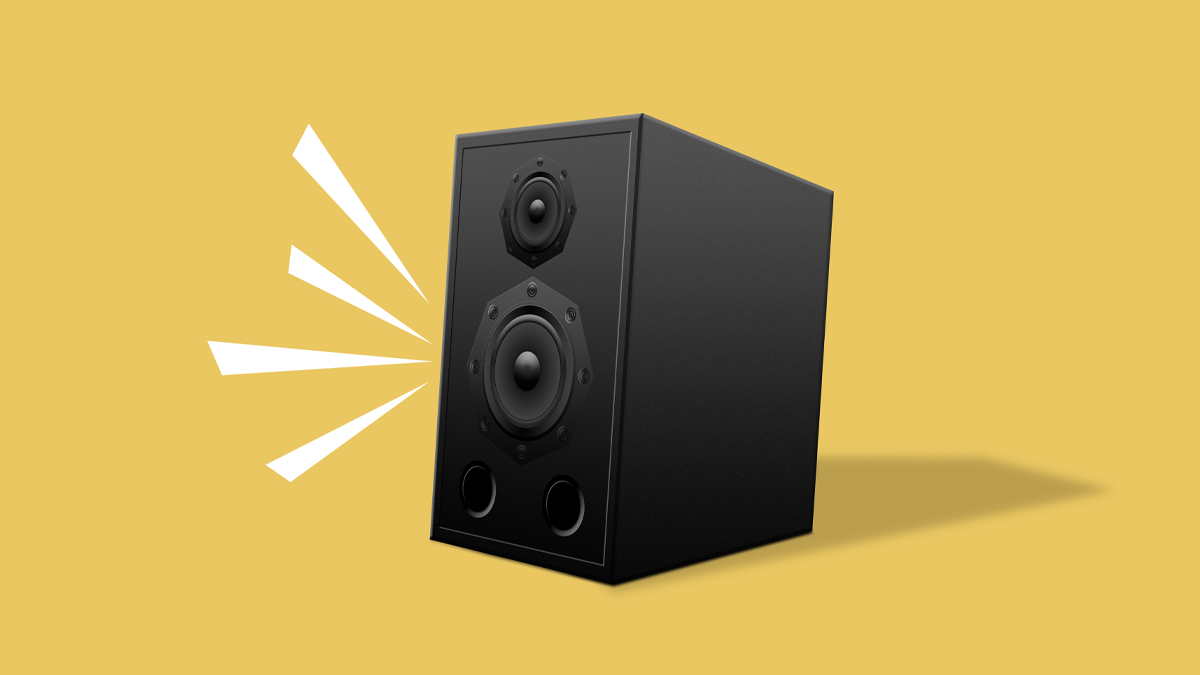
Surround Back Speaker is a speaker channel placed behind the audience to reproduce the rear portion of a surround sound field. It is commonly used in multi channel audio systems where sound designers want motion, depth, and spatial realism to continue beyond the side walls and extend fully behind the listener. In cinema and advanced screening environments, this speaker helps complete the sound image so that effects do not stop at the left and right surround zones.
Basic idea: A Surround Back Speaker handles audio information that is intended to come from the rear center area or the rear left and rear right area, depending on the sound format and system design.
Listening experience: When correctly installed and calibrated, it makes the audience feel more surrounded by sound. Instead of hearing action only from the front and sides, people can also sense movement, ambience, and directional effects coming from behind them.
System position: In many setups, Surround Back Speaker is used along with front speakers, side surround speakers, subwoofers, and other support channels. It does not replace the side surround channels. It adds another layer of rear coverage.
In practical terms, this speaker is important for immersive playback. A rainstorm, aircraft flyover, crowd reaction, jungle atmosphere, or chase sequence becomes more convincing when the rear sound field is continuous and believable. That is why Surround Back Speaker has become an important part of advanced cinematic audio design.
How does Surround Back Speaker Work?
Surround Back Speaker works by receiving a dedicated rear surround signal from an audio processor, cinema sound processor, AV receiver, or digital playback system. That signal is then amplified and sent to one or more speakers placed behind the audience area. The speaker converts the electrical signal into acoustic energy, allowing the audience to hear sound from the back of the room.
Signal path: Audio is first mixed or encoded in a format that includes rear surround information. During playback, the processor decodes this information and routes it to the correct channel.
Rear image creation: The main purpose is to create a rear acoustic image. This means that when a sound is meant to move from the front of the room to the back, the Surround Back Speaker reproduces the final stage of that movement.
Channel separation: Good system design ensures that side surrounds and back surrounds remain distinct. This separation improves clarity and prevents the rear field from becoming vague or blurred.
In many cinema applications, Surround Back Speaker may not be a single physical cabinet. It can be a channel reproduced by multiple rear wall speakers operating together so that the whole audience experiences consistent rear coverage. In a home or studio environment, it may be one or two actual speakers, often labeled surround back left and surround back right.
Processing role: Digital processing often includes equalization, delay alignment, crossover settings, and level control. These adjustments make the rear sound field match the rest of the system.
Acoustic integration: The speaker must integrate with room acoustics. If the rear channel is too loud, it distracts the audience. If it is too weak, the immersive effect disappears. Proper tuning makes the sound feel natural and intentional.
As a result, Surround Back Speaker works not simply by making sound from behind, but by working as part of a carefully managed audio system that delivers accurate timing, tonal consistency, and spatial continuity.
What are the Components of Surround Back Speaker?
A Surround Back Speaker system includes several technical and physical elements that allow it to perform effectively in cinematic playback.
Driver section: The speaker usually contains one or more drivers. These may include a woofer for mid and low frequencies and a tweeter for high frequencies. In larger cinema speakers, there may be more advanced driver arrangements to improve dispersion and power handling.
Enclosure: The cabinet or enclosure supports the drivers and influences tonal balance, resonance control, and projection. A well designed enclosure helps the speaker produce clean sound without unwanted vibration.
Crossover network: Many passive speakers include a crossover that divides frequencies between the woofer and tweeter. This ensures that each driver reproduces the range it is designed to handle.
Amplification: Surround Back Speaker requires amplification. In passive systems, an external amplifier powers the speaker. In active systems, amplification may be built into the speaker itself.
Input connection: Wiring terminals or professional connectors link the speaker to the audio chain. Reliable connection is important in cinema environments because long cable runs and continuous operation demand stability.
Mounting hardware: Wall brackets, ceiling supports, rear panel mounts, or custom rigging may be used to position the speaker properly behind the audience.
Acoustic treatment support: While not part of the speaker cabinet, room surfaces and acoustic treatment influence how the speaker performs. Rear wall reflections can affect clarity and directionality.
Digital control elements: In modern cinema installations, processors may add delay, equalization, loudspeaker management, and channel routing. These supporting components are essential to the full function of the speaker channel.
Protection circuits: Some systems include protection features to guard against overload, overheating, or signal peaks that could damage the drivers.
Measurement and tuning tools: Calibration microphones, analyzers, and tuning software are often used to optimize the channel. These tools help achieve even coverage and tonal consistency across the rear listening area.
Together, these components make Surround Back Speaker more than a simple audio box. It is part of a coordinated electroacoustic system built for reliable and immersive sound reproduction.
What are the Types of Surround Back Speaker?
There are several types of Surround Back Speaker used across cinema, studio, and premium residential environments. The best type depends on room size, audience area, sound format, and installation goals.
Single rear surround type: Some systems use one rear center style speaker or one combined rear channel. This approach is simpler and may be found in compact environments.
Dual rear surround type: Many advanced systems use surround back left and surround back right channels. This provides better stereo imaging behind the listener and supports smoother sound movement across the rear field.
Direct radiating type: These speakers project sound more directly toward the audience. They are valued for precision, clarity, and accurate localization.
Wide dispersion type: Some cinema surround speakers are designed for broad coverage so that many seats receive consistent sound. This is especially useful in larger rooms.
Wall mounted type: These are installed on the rear wall and are common in cinemas and screening rooms.
Ceiling assisted type: In some spaces, rear sound reinforcement may involve overhead placement or a blend of rear and elevated channels, especially in immersive audio formats.
Passive type: Passive Surround Back Speakers require external amplification and are widely used in professional cinema systems.
Active type: Active models include internal amplification and are often used in controlled environments where integrated system management is preferred.
Compact type: Smaller cabinets are useful in private cinema rooms, editing suites, and mixing spaces.
High output cinema type: Large commercial cinema environments may use robust speakers with high sensitivity and strong power handling to maintain clear rear coverage for large audiences.
Array based rear surround type: Instead of one cabinet per channel, some cinemas use multiple speakers along the rear wall reproducing the back surround content as a distributed system.
Each type serves a different operational need. The choice depends on whether the priority is precision, broad audience coverage, installation flexibility, output capacity, or immersive format compatibility.
What are the Applications of Surround Back Speaker?
Surround Back Speaker is used in many environments where realistic spatial sound is important.
Commercial cinemas: In movie theaters, it helps create an enveloping rear sound field for action scenes, ambient effects, crowd sounds, and directional transitions.
Private screening rooms: High end screening spaces use rear surround channels to maintain cinematic accuracy during content review and presentation.
Home cinema systems: Enthusiast installations often include Surround Back Speaker in 6.1, 7.1, or larger systems to improve immersion.
Post production studios: Sound editors and re recording mixers monitor rear channels during film and television production to ensure correct translation of the mix.
Dubbing theaters: Dialogue replacement and final mix spaces use accurate surround back monitoring so that the finished soundtrack plays correctly in exhibition environments.
Theme attractions: Entertainment venues that simulate motion, adventure, or environmental immersion often rely on rear surround channels.
Gaming and simulation rooms: Advanced game audio systems benefit from rear channel playback for positional awareness and immersion.
Training and demonstration spaces: Audio technology demonstrations often include rear surround speakers to show how multi channel formats reproduce space and movement.
Museum and experiential installations: Curated audio experiences sometimes use rear speakers to place the audience inside a scene or narrative environment.
These applications show that Surround Back Speaker is relevant wherever sound needs to feel three dimensional, continuous, and emotionally engaging.
What is the Role of Surround Back Speaker in Cinema Industry?
Surround Back Speaker plays a major role in the cinema industry because modern audiences expect sound to be immersive, directional, and emotionally powerful. Visual storytelling in cinema is strengthened when the rear sound field supports the action on screen with believable space and motion.
Narrative support: Rear sound helps tell the story. A distant voice, a passing vehicle, an approaching threat, or a large environment can be communicated more effectively when sound comes from behind as well as around the audience.
Immersion enhancement: Cinema is not only about watching images. It is about entering a world. Surround Back Speaker helps close the acoustic gap behind the audience and makes that world feel complete.
Motion continuity: In complex scenes, sound may travel from front left to side surround to rear back and then across the room. Without proper rear channels, that movement can feel incomplete.
Scale creation: Large spaces such as battlefields, stadiums, forests, cities, or outer space environments sound bigger and more convincing when rear channels are active.
Audience engagement: When people feel surrounded by sound, attention and emotional involvement often increase. This supports suspense, realism, excitement, and atmosphere.
Technical translation: In the cinema industry, content is mixed for specific playback formats. Surround Back Speaker ensures that what was designed in the mix stage can be reproduced properly in exhibition or screening.
Competitive quality: The cinema industry uses sound quality as a major part of premium presentation. Rear surround performance contributes to the perceived quality of the venue.
For these reasons, Surround Back Speaker is not a minor addition. It is a practical and artistic tool that supports both technical standards and audience satisfaction in cinematic presentation.
What are the Objectives of Surround Back Speaker?
The objectives of Surround Back Speaker are tied to spatial accuracy, audience immersion, and system completeness.
Rear coverage objective: One main goal is to provide sound coverage behind the audience so that the rear zone is not acoustically empty.
Localization objective: It helps place sounds in a more precise rear position, especially when a soundtrack contains dedicated back channel information.
Continuity objective: It supports smooth panning and movement of sound around the room.
Immersion objective: It increases the sense of being inside the film environment rather than simply facing a screen with supporting audio.
Balance objective: It contributes to even surround energy across the listening area by complementing the side surround channels.
Format support objective: It allows cinema and media playback systems to reproduce advanced surround formats correctly.
Creative objective: It gives filmmakers and sound professionals more freedom to design scenes with richer spatial detail.
Audience consistency objective: In larger venues, multiple rear speakers carrying back surround content help maintain a similar experience across many seats.
Operational objective: It supports professional presentation standards in cinemas, dubbing rooms, and premium media spaces.
Each objective connects to the central purpose of cinematic audio, which is to deliver sound that is accurate, expressive, and fully integrated with the visual experience.
What are the Benefits of Surround Back Speaker?
Surround Back Speaker offers several important benefits for cinema and advanced audio playback environments.
Greater immersion: The audience feels more fully enclosed by sound, which increases realism and emotional connection.
Improved rear detail: Sounds intended for the back of the room become clearer and more distinct.
Better sound movement: Audio transitions around the room feel smoother and more believable.
Enhanced atmosphere: Environmental sounds such as wind, rain, crowd noise, reverberant spaces, and background textures become more convincing.
Stronger storytelling: Directors and sound teams can create more dramatic and expressive scenes through spatial design.
Higher playback accuracy: Soundtracks mixed with rear surround information can be reproduced more faithfully.
More complete surround field: The space behind the audience becomes an active part of the presentation instead of a silent or weak area.
Premium listening value: In both cinema venues and private theaters, a well implemented rear surround system contributes to a more premium experience.
Flexible system design: Surround Back Speaker can be adapted for small rooms, large auditoriums, and different playback formats.
Audience satisfaction: Clear and immersive sound often improves overall enjoyment and perceived presentation quality.
These benefits explain why rear surround channels are widely valued in cinematic electronics and why they remain relevant as sound systems continue to evolve.
What are the Features of Surround Back Speaker?
Surround Back Speaker includes several features that help it meet the demands of cinematic playback.
Directional rear reproduction: It is designed to reproduce sound from behind the listener, supporting spatial accuracy.
Wide coverage capability: Many cinema models are built to distribute sound across a broad seating area.
Tonal matching: Good systems ensure that the rear speaker has a tonal character that blends with the front and side speakers.
Power handling: Cinema environments require speakers that can operate reliably at significant playback levels.
Speech and effect clarity: The speaker must reproduce not only ambient effects but also detailed audio textures when required.
Integration with processing: Modern systems support equalization, time alignment, and channel management through digital processors.
Flexible mounting: Rear surround speakers are often designed for wall mounting, elevated placement, or distributed installation.
Durability: Professional cinema speakers are made for long operational hours and repeated high demand use.
Format compatibility: They are designed to work within multi channel playback structures such as 6.1, 7.1, and immersive cinema systems.
Controlled dispersion: Some models are engineered to spread sound evenly without creating excessive hot spots or dead zones.
Low distortion performance: Clean playback is important so that effects remain natural and do not become harsh or tiring.
These features make Surround Back Speaker suitable for environments where stable performance, coverage consistency, and immersive realism are required.
What are the Examples of Surround Back Speaker?
Examples of Surround Back Speaker can be understood both as practical system examples and as use case examples.
System example: In a 7.1 cinema room, two rear channels called surround back left and surround back right are placed behind the audience to extend the surround field.
Distributed cinema example: In a commercial theater, several rear wall speakers may all reproduce the surround back content so that the entire seating area experiences rear coverage.
Private theater example: A dedicated home cinema may use two compact rear speakers mounted on the back wall at ear level or slightly above ear level.
Mixing room example: A dubbing studio may use precisely calibrated rear monitors so the sound team can evaluate how back surround effects translate to exhibition spaces.
Scene example: During a chase sequence, a motorcycle may move from front left to side surround and then into the rear back field, creating a convincing wraparound effect.
Atmosphere example: In a forest scene, birds, wind, insects, and distant movement may fill the rear area, making the audience feel located inside the environment.
Suspense example: In a horror film, a quiet rear sound cue can build tension by suggesting presence behind the audience.
Crowd example: In a stadium or battle sequence, rear surround channels can reproduce audience reactions or battlefield activity that extends beyond the front screen.
These examples show that Surround Back Speaker is both a physical playback component and a storytelling tool that shapes audience perception.
What is the Definition of Surround Back Speaker?
Surround Back Speaker can be defined as a loudspeaker or speaker channel positioned behind the listening area to reproduce rear surround audio information in a multi channel sound system.
Technical definition: It is part of a surround sound configuration that extends spatial audio reproduction beyond the side surrounds into the rear listening zone.
Functional definition: It serves to create depth, motion continuity, and immersive rear imaging by delivering sound from behind the audience.
Cinema oriented definition: In cinema industry applications, it is an electroacoustic playback element used to improve the realism and completeness of theatrical sound presentation.
This definition highlights position, function, and system role. It also makes clear that Surround Back Speaker is not simply another speaker in the room. It is a dedicated part of a spatial audio architecture.
What is the Meaning of Surround Back Speaker?
The meaning of Surround Back Speaker is closely connected to the idea of rear immersion in sound reproduction. The word surround refers to audio that envelops the audience from multiple directions. The word back refers to the rear portion of that sound field. The word speaker refers to the device or channel that turns the audio signal into audible sound.
Practical meaning: It means a speaker that carries the sound intended to be heard from behind the listener.
Experiential meaning: It represents a more complete and realistic listening experience in which the audience is acoustically surrounded, not just sonically supported from the front.
Industry meaning: In cinematic electronics, it means a specialized speaker channel used to reproduce advanced surround formats with better rear detail and spatial continuity.
In simple terms, Surround Back Speaker means the rear extension of surround sound. It helps make cinematic audio feel fuller, larger, and more lifelike.
What is the Future of Surround Back Speaker?
The future of Surround Back Speaker is closely tied to the growth of immersive audio, advanced signal processing, and audience expectations for premium cinematic experiences. Even as object based sound becomes more common, rear speaker channels remain essential because immersive systems still need accurate physical loudspeakers in the room to reproduce sound convincingly.
Immersive format evolution: Future cinema systems will continue to rely on precise rear speaker placement as part of larger spatial audio grids.
Smarter processing: Better room correction, adaptive tuning, and intelligent channel management will improve rear surround accuracy and consistency.
Improved speaker design: Future models may offer lighter materials, better power efficiency, lower distortion, and more controlled coverage.
Integration with object based audio: As sound objects move freely through three dimensional space, rear speakers will play a vital role in rendering those movements naturally.
Greater installation flexibility: New designs may support easier mounting and more adaptable rear channel deployment in both large cinemas and compact theaters.
Audience expectation growth: Viewers increasingly value immersive presentation. This will keep demand strong for rear surround performance that feels precise and engaging.
Hybrid environments: Private cinemas, premium screening rooms, and mixed media spaces will likely adopt more advanced rear channel solutions once reserved mainly for commercial exhibition.
The future of Surround Back Speaker is therefore not decline but refinement. Its purpose will remain important while its design, control, and integration become more advanced.
Summary
- Surround Back Speaker is a rear channel speaker used to reproduce sound from behind the audience in a surround sound system.
- It helps complete the surround field by adding depth, rear detail, and smoother sound movement.
- It works through signal decoding, amplification, speaker reproduction, and careful system calibration.
- Its main components include drivers, enclosure, crossover, amplification, connections, mounting support, and digital processing.
- Common types include single rear, dual rear, direct radiating, wide dispersion, passive, active, compact, and high output cinema versions.
- It is widely used in cinemas, private theaters, dubbing rooms, post production studios, and immersive entertainment spaces.
- In the cinema industry, it supports storytelling, realism, motion continuity, and premium presentation quality.
- Its objectives include rear coverage, localization, immersion, balance, and correct playback of multi channel formats.
- Its benefits include better immersion, stronger atmosphere, clearer rear detail, and more accurate soundtrack reproduction.
- Its features often include controlled dispersion, tonal matching, durability, processing integration, and flexible installation.
- Practical examples range from 7.1 cinema rooms to distributed rear wall speaker systems in commercial theaters.
- Its definition centers on being a speaker or channel dedicated to rear surround audio reproduction.
- Its meaning is the rear extension of surround sound that makes audio feel fuller and more lifelike.
- Its future remains strong because immersive audio systems still depend on accurate rear speaker reproduction.

