

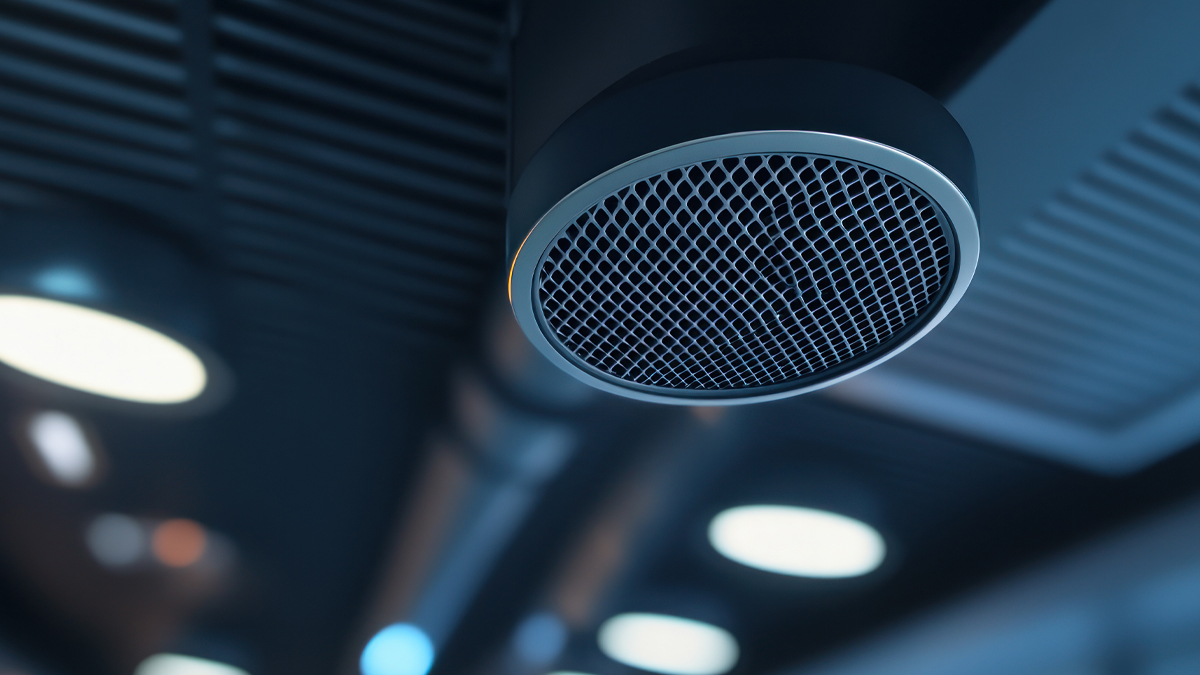
What is Ceiling Speaker?
A ceiling speaker is a loudspeaker designed to be mounted overhead, usually flush with a ceiling surface, so that sound can be distributed from above without taking up floor or wall space. In the context of cinematic electronics and the cinema industry, a ceiling speaker is an important audio device used to create a more immersive sound field inside screening rooms, home theaters, preview spaces, and advanced entertainment venues. It helps place sound effects, ambient details, music layers, and motion cues in the upper part of the listening environment.
Basic concept: A ceiling speaker is not only a space saving speaker. It is also a positioning tool that allows sound designers, installers, and cinema engineers to reproduce audio from above the audience. This overhead sound adds dimension to the listening experience and makes scenes feel more realistic and engaging.
Cinema relevance: Modern cinema sound is no longer limited to left, center, right, surround, and subwoofer channels. Many advanced systems include height information. Ceiling speakers help reproduce that height layer, which is especially valuable for rain, aircraft movement, environmental atmosphere, crowd scenes, and dramatic spatial transitions.
Design purpose: Ceiling speakers are usually engineered to blend into architectural surfaces while maintaining clear, controlled, and evenly distributed sound. Their form factor often includes a round or square grille, a compact enclosure or back can, a woofer, a tweeter, and mounting hardware for secure installation.
Audience experience: When properly integrated, a ceiling speaker makes sound seem less tied to visible hardware and more connected to the story world. That quality is highly valued in cinema environments where immersion and realism are central goals.
How does Ceiling Speaker Work?
A ceiling speaker works by converting electrical audio signals into audible sound waves and projecting those waves downward into the listening area. Like other speakers, it relies on electromagnetic movement inside the driver assembly. However, its location and orientation give it a special role in sound coverage and overhead imaging.
Signal flow: The amplifier sends an electrical signal to the speaker. This signal reaches the voice coil, which sits within a magnetic field created by the speaker magnet. As the signal changes, the voice coil moves back and forth, causing the cone to vibrate. These vibrations push and pull air, producing sound waves that travel into the room.
Overhead distribution: Because the unit is installed in the ceiling, its sound radiates from above. This allows the speaker to create height effects, wider sound diffusion, or background coverage depending on the system design. In cinema settings, overhead sound can complement wall mounted surround speakers and front screen channels.
Frequency handling: Many ceiling speakers are built as two way designs. The woofer handles lower and mid frequencies, while the tweeter reproduces higher frequencies. A crossover network divides the signal so each driver works within its intended range. This improves clarity and tonal balance.
Directional behavior: Some ceiling speakers are wide dispersion models that spread sound across a broad area. Others have angled baffles or aimable tweeters so installers can direct sound toward audience seats. This is useful in cinema applications where accurate coverage and controlled listening zones matter.
Integration with cinema systems: In immersive audio systems, ceiling speakers are connected to dedicated channels or object based processing outputs. The cinema processor determines where a sound should appear in the room and routes the signal accordingly. If a helicopter is meant to move overhead, the system can send sound to the ceiling speakers in a timed pattern that matches the intended motion.
What are the Components of Ceiling Speaker?
A ceiling speaker consists of several core components that work together to deliver audio performance, durability, and safe installation.
Driver unit: The driver is the heart of the speaker. It usually includes a woofer cone for mid and low frequencies and sometimes a separate tweeter for high frequencies. The quality of the driver influences clarity, tonal accuracy, and output capability.
Woofer cone: The woofer cone moves air to produce much of the audible range. Cone materials may include polypropylene, treated paper, fiberglass, or composite materials. Each material affects stiffness, weight, and tonal behavior.
Tweeter: The tweeter handles high frequencies such as detail, sparkle, and dialogue articulation. Some ceiling speakers have dome tweeters that can be pivoted to improve targeting.
Voice coil: The voice coil converts electrical energy into mechanical motion. It moves inside the magnetic gap and drives the cone. Heat resistance and winding quality affect power handling and reliability.
Magnet structure: The magnet creates the magnetic field required for driver motion. Strong, stable magnet assemblies help maintain efficiency and control.
Crossover network: The crossover splits the audio signal into suitable frequency bands for different drivers. A well designed crossover improves coherence, reduces distortion, and protects the drivers.
Grille: The grille covers the visible face of the speaker and protects the internal components. In many installations, it is paintable so it can visually blend with the ceiling.
Frame and mounting system: The frame supports the speaker body, while clamps or mounting tabs secure it in the ceiling cutout. Proper mounting is essential for safety and acoustic stability.
Back can or enclosure: Some ceiling speakers include an enclosure behind the driver. This helps control rear sound energy, improve acoustic consistency, and meet certain building or fire requirements. In cinema use, enclosed designs can offer more predictable performance.
Terminal connections: These are the electrical input points where the speaker cable connects. Good terminals support secure wiring and long term reliability.
Acoustic treatments: Some models include damping materials, waveguides, or dispersion shaping elements to improve sound quality and room interaction.
What are the Types of Ceiling Speaker?
Ceiling speakers come in several types, each suited to different audio goals, room sizes, and cinema related uses.
Full range ceiling speakers: These are designed to reproduce a broad range of frequencies from a single unit. They are commonly used for ambient sound, announcements, and general coverage.
Two way ceiling speakers: These include a woofer and tweeter with a crossover. They provide better clarity and detail than simpler full range designs and are common in higher quality installations.
Coaxial ceiling speakers: In this design, the tweeter is mounted in front of or within the woofer axis. This helps create more unified sound radiation and can improve phase consistency.
Angled baffle ceiling speakers: These have a driver assembly mounted at an angle inside the speaker body. The sound can be aimed toward the audience rather than firing straight down, which improves imaging and intelligibility.
Aimable ceiling speakers: These include pivoting tweeters or movable driver sections. They are useful when seating positions or room geometry require flexible sound targeting.
High output ceiling speakers: These models are engineered for greater power handling and sound pressure levels. They are suitable for larger rooms or spaces requiring stronger performance.
Low profile ceiling speakers: These are designed for shallow ceiling cavities where installation depth is limited.
Enclosed ceiling speakers: These have built in back cans or sealed housings. They provide controlled acoustic behavior and can reduce sound leakage to adjacent spaces.
Distributed audio ceiling speakers: These are intended for even sound coverage across many units. They are often used in lobbies, corridors, concession areas, and other support spaces around cinema venues.
Immersive audio ceiling speakers: These are used as height channels in advanced surround and object based audio systems. They are selected for precise placement, tonal matching, and controlled coverage.
What are the Applications of Ceiling Speaker?
Ceiling speakers are widely used in different parts of the cinema ecosystem, from core screening rooms to support and commercial spaces.
Main auditorium enhancement: In advanced cinema installations, ceiling speakers can reproduce overhead effects and environmental layers that increase immersion.
Home cinema and private screening rooms: Ceiling speakers are very popular in residential theater systems and small preview theaters where users want cinematic height effects without visible wall clutter.
Lobby and concession sound: Cinema venues often use ceiling speakers in public areas for background music, promotional announcements, queue management, and general ambiance.
VIP lounges and premium halls: Premium cinema spaces may use ceiling speakers to create a refined, evenly distributed audio environment with minimal visual intrusion.
Training and demo rooms: Equipment manufacturers, cinema integrators, and education centers may install ceiling speakers in demo spaces to showcase immersive sound formats.
Museums and entertainment attractions: Venues connected to cinematic storytelling, interactive exhibitions, or themed entertainment may use ceiling speakers to deliver overhead effects and environmental audio.
Conference and presentation areas: Multipurpose halls inside cinema complexes can use ceiling speakers for speech, presentations, trailers, and event programming.
Accessibility and communication: Ceiling speakers can support public address functions, safety announcements, and emergency communication systems when integrated into building wide audio infrastructure.
What is the Role of Ceiling Speaker in Cinema Industry?
The role of the ceiling speaker in the cinema industry is closely tied to immersion, spatial realism, and efficient architectural integration.
Immersive storytelling: Ceiling speakers allow sound to originate from above the audience. This supports modern cinematic storytelling where motion, atmosphere, and space are critical to emotional engagement.
Height channel reproduction: In immersive audio systems, the ceiling speaker acts as a height channel or overhead object reproduction point. This gives mixers and engineers more freedom to position sound in three dimensions.
Architectural cleanliness: Cinemas and premium entertainment venues often aim for a visually clean interior. Ceiling speakers help maintain that goal because they can be integrated discreetly into the room structure.
Coverage optimization: In certain spaces, overhead placement improves coverage uniformity. This is useful not only in auditoriums but also in foyers, corridors, and hospitality zones.
Support for premium formats: The cinema industry increasingly values technologies that make the audience feel inside the film rather than merely in front of it. Ceiling speakers contribute to that premium perception by enabling more sophisticated sound design.
System flexibility: With ceiling speakers, integrators can design layered sound systems that combine screen channels, side surrounds, rear surrounds, subwoofers, and overhead channels. This flexibility helps adapt audio systems to different room types and commercial goals.
What are the Objectives of Ceiling Speaker?
The objectives of a ceiling speaker in cinema related use go beyond simple sound playback. Its purpose is technical, practical, and experiential.
Spatial enhancement: One primary objective is to add vertical dimension to the sound field so that audio feels more natural and enveloping.
Immersion improvement: Ceiling speakers help increase audience engagement by making sound effects and atmosphere more believable.
Even sound distribution: Another objective is to spread sound more evenly across a space, especially in public or support areas within cinema facilities.
Aesthetic integration: Ceiling speakers are meant to deliver performance while remaining visually unobtrusive.
Efficient use of space: Since they are mounted overhead, they preserve wall and floor space for seating, décor, and circulation.
Channel expansion: In immersive cinema systems, ceiling speakers provide additional channels that expand the creative possibilities of sound mixing.
Clear communication: In non auditorium areas, they support intelligible announcements, paging, and informational messaging.
Consistent experience: Properly selected ceiling speakers help maintain tonal balance and consistent audio quality across multiple zones within a cinema complex.
What are the Benefits of Ceiling Speaker?
Ceiling speakers offer many benefits that make them valuable in the cinema industry and related entertainment environments.
Improved immersion: Overhead sound increases realism and helps create a more cinematic atmosphere.
Space saving design: Ceiling mounted installation avoids clutter and keeps equipment out of the audience path.
Clean visual appearance: Since the speaker is built into the ceiling, it preserves the architectural look of the room.
Flexible placement: Ceiling speakers can be positioned according to acoustic design needs, allowing better room coverage.
Enhanced audio layering: They make it possible to separate sound vertically, which improves spatial detail and motion effects.
Better support for premium experiences: Modern audiences often expect a more engaging sound environment. Ceiling speakers help venues meet that expectation.
Useful in multiple zones: The same ceiling speaker concept can serve auditoriums, lobbies, lounges, and service areas.
Reduced interference with interior layout: Since they do not occupy wall surface or floor area, they allow greater freedom in room planning.
Potential for broad coverage: Wide dispersion models can cover larger listening areas efficiently.
Professional system integration: Ceiling speakers can be incorporated into cinema processors, amplifiers, and control systems for coordinated operation.
What are the Features of Ceiling Speaker?
Ceiling speakers include a range of features that determine their performance, installation ease, and suitability for cinema applications.
Flush mount construction: This allows the speaker to sit neatly within the ceiling surface.
Paintable grille: The grille can often be painted to match the ceiling finish.
Wide dispersion: Many models are engineered to spread sound across a broad listening area.
Pivoting tweeter: This feature lets installers direct high frequencies toward the audience for clearer sound.
Angled driver layout: Some speakers are built with angled baffles for better targeting.
Two way design: Separate woofer and tweeter components improve frequency reproduction.
High power handling: Cinema related applications may require speakers that can handle stronger amplifier output.
Low distortion performance: Quality driver materials and crossover design help maintain clean sound.
Protective enclosure options: Back cans and sealed housings improve consistency and reduce unwanted leakage.
Easy installation hardware: Dog leg clamps, template guides, and quick connect terminals make installation more efficient.
Moisture and dust resistance: Some models include protective treatments for longer durability in demanding environments.
Tonal matching capability: Professional systems often require ceiling speakers that match the tonal character of other speakers in the same venue.
What are the Examples of Ceiling Speaker?
There are several practical examples of how ceiling speakers are used in real cinema related scenarios.
Immersive home theater room: A private cinema may use four ceiling speakers to reproduce overhead effects such as rain, thunder, or flying objects.
Boutique cinema hall: A premium small auditorium may install ceiling speakers as part of an immersive sound layout to enhance luxury viewing.
Cinema lobby music system: Ceiling speakers may be distributed evenly across the lobby ceiling to provide background music and promotional audio.
Concession area paging system: Staff announcements and queue instructions may be delivered through ceiling speakers for clear communication.
Preview studio: A post production or review room may use ceiling speakers to evaluate mixes that include height information.
Museum cinema zone: An exhibit space with film related content may use ceiling speakers for environmental sounds such as wind, crowd ambience, or aircraft flyovers.
Premium lounge area: A cinema lounge may use discreet ceiling speakers for soft music and spoken announcements without affecting the interior style.
These examples show that ceiling speakers are not limited to one type of room. They are adaptable devices that support both entertainment and operational needs.
What is the Definition of Ceiling Speaker?
The definition of a ceiling speaker is a speaker unit specifically designed for installation within or on a ceiling surface in order to project sound from above and distribute audio efficiently within a room.
Technical definition: A ceiling speaker is an electroacoustic transducer mounted overhead that converts amplified electrical signals into sound waves for listening coverage, spatial enhancement, or immersive audio reproduction.
Cinema focused definition: In the cinema industry, a ceiling speaker is an overhead loudspeaker used to support immersive sound design, height channel reproduction, ambient coverage, or architectural audio integration within entertainment spaces.
Functional definition: It is a speaker intended to deliver sound while minimizing visible equipment presence and maximizing room integration.
What is the Meaning of Ceiling Speaker?
The meaning of ceiling speaker can be understood from both a literal and practical point of view.
Literal meaning: The term refers to a speaker that is placed in the ceiling.
Practical meaning: It describes an audio solution that uses overhead positioning to improve sound coverage, save space, and support a more immersive listening environment.
Industry meaning: Within cinematic electronics, a ceiling speaker represents a modern approach to spatial audio design. It helps move sound beyond the traditional horizontal plane and into a three dimensional experience.
User meaning: For audiences and venue owners, it means cleaner interiors, broader design options, and more engaging sound reproduction.
What is the Future of Ceiling Speaker?
The future of ceiling speakers in the cinema industry looks strong because audience expectations for immersion, realism, and elegant venue design continue to grow.
Greater immersive adoption: As immersive audio formats become more common across cinemas, private theaters, and premium entertainment spaces, ceiling speakers will remain important for height and overhead reproduction.
Better acoustic precision: Future ceiling speakers are likely to deliver more controlled dispersion, improved efficiency, and better tonal consistency with other speaker channels.
Smarter integration: Advanced processors, calibration software, and networked audio systems will make ceiling speakers easier to configure and optimize.
Improved materials: New cone materials, lighter assemblies, and better enclosures may improve durability, output, and sound quality.
Architectural refinement: Manufacturers will continue to create models that are easier to hide visually while still achieving professional performance.
Flexible installation options: Future products may support more compact mounting, shallow depth designs, and modular accessories for diverse building conditions.
Higher demand in premium venues: Luxury cinemas, boutique halls, and hybrid entertainment spaces will likely continue to invest in overhead sound to differentiate the customer experience.
Support for mixed use spaces: Cinema venues are increasingly multipurpose. Ceiling speakers will be useful in auditoriums, hospitality zones, event spaces, and branded experience areas.
Sustainability direction: Energy efficient components and durable designs may become more important as venues seek long term operational value.
Summary
- A ceiling speaker is a speaker installed overhead to reproduce sound from above while saving floor and wall space.
- In cinema environments, ceiling speakers are important for immersive sound, height effects, ambient coverage, and architectural cleanliness.
- They work by converting amplified electrical signals into sound waves through drivers, voice coils, magnets, and crossover networks.
- Key components include the woofer, tweeter, voice coil, magnet, grille, enclosure, crossover, and mounting system.
- Common types include full range, two way, coaxial, angled baffle, aimable, enclosed, and immersive audio ceiling speakers.
- Ceiling speakers are used in auditoriums, home theaters, preview rooms, lobbies, concession areas, lounges, and presentation spaces.
- Their role in the cinema industry is to improve spatial realism, audience immersion, and system flexibility.
- Their objectives include better sound distribution, vertical audio layering, clean interior integration, and support for modern cinematic storytelling.
- Major benefits include improved immersion, neat appearance, efficient space use, flexible installation, and multi zone functionality.
- Their features often include flush mounting, wide dispersion, pivoting tweeters, high power handling, paintable grilles, and easy installation systems.
- The term ceiling speaker means an overhead audio solution that enhances both practical room design and advanced sound reproduction.
- The future of ceiling speakers is closely linked to the continued growth of immersive cinema, smarter audio systems, and refined architectural integration.

