

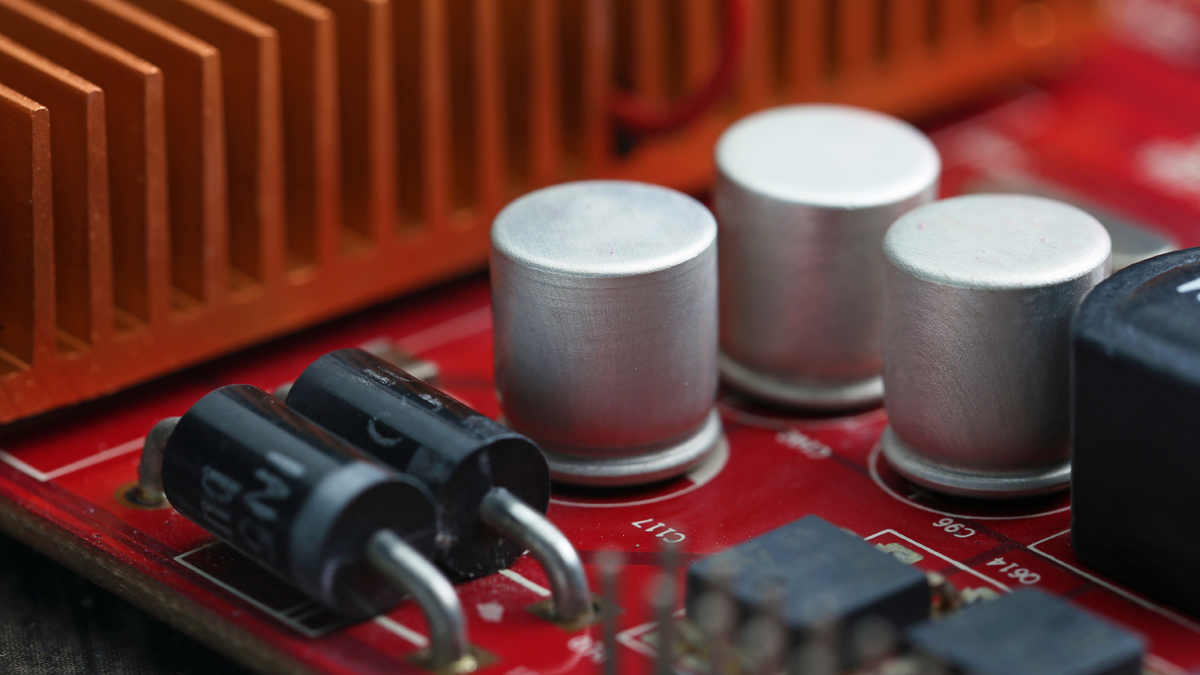
High Voltage Divider Resistor
High Voltage Divider Resistor is an important topic within resistors used in cinematic electronics because cinema systems often combine high light output, sensitive control electronics, and demanding safety requirements. In practical engineering, a high voltage divider resistor is used to reduce a large voltage to a smaller, measurable, or usable voltage while preserving a predictable ratio. That makes it valuable in monitoring, protection, calibration, feedback, and test circuits, especially where the original voltage is too high for a control board, meter, or oscilloscope input to handle directly.
What is High Voltage Divider Resistor?
Basic idea: A high voltage divider resistor is a resistor, or more often a coordinated resistor network, designed to split a high input voltage into a lower output voltage according to a fixed ratio. In ordinary low voltage electronics, a simple divider may use two common resistors. In high voltage work, however, the divider must withstand much larger electrical stress, so the parts are chosen for voltage rating, insulation performance, stability, ratio accuracy, and safe spacing from nearby conductors. Product families built specifically for this job often advertise ratio tolerance, tracking TCR, low voltage coefficient, and high limiting voltage because these features directly affect measurement accuracy and long term reliability.
Practical interpretation: In many real designs, the term can refer to two related things. It may refer to the individual resistors used to build a divider chain, or it may refer to a purpose built divider component that already contains the required high value section and low value section in one packaged device. This is a recognized product category and not just a theoretical circuit idea.
How does High Voltage Divider Resistor Work?
Operating principle: A divider works by placing resistive elements in series across an input voltage and taking the output from a chosen point in that chain. The output follows the resistor ratio. For a two resistor divider, the lower resistor sees only part of the input, and the output can be described as Vout equals Vin multiplied by Rlower divided by Rupper plus Rlower. Voltage dividers split the input proportionally based on resistor values and are widely used wherever precise voltage control or voltage scaling is required.
High voltage behavior: In a high voltage divider, the physics remain the same, but the design burden becomes much greater. Each section must tolerate electrical stress without flashover, leakage, excessive temperature rise, or ratio drift. Because high voltage can appear between terminations and adjacent metal parts, the resistor must be mounted at an adequate distance from other conductors. For ultra high voltage applications, designers may even immerse the parts in oil or pot them in void free silicone compound to reduce corona or surface tracking.
Accuracy conditions: A divider only gives a trustworthy output if the loading connected to the output does not disturb the ratio too much. Common divider issues include instability under load, energy inefficiency from low value resistors, thermal drift from poor TCR, and loading effects when the connected device has low input impedance. In measurement work, this is why high voltage probes and divider networks are matched to the input resistance and capacitance of the instrument being used.
What are the Components of High Voltage Divider Resistor?
Resistive section: The heart of the device is the resistive path itself. In many high voltage parts this may be thick film, metal film, or other precision resistive material formed on a ceramic or alumina substrate. These substrate and film choices are important because they help the part survive voltage stress, manage heat, and hold ratio accuracy.
Protective and mechanical elements: A true high voltage divider part also includes protective coating, terminations, insulation system, and package geometry suitable for elevated voltage. In addition, high quality divider assemblies are specified by absolute tolerance, ratio tolerance, TCR, tracking TCR, and VCR because those parameters determine whether the scaled output stays accurate over temperature, time, and changing applied voltage.
What are the Types of High Voltage Divider Resistor?
Discrete divider chain: One common type is the classic series chain made from multiple individual high value resistors. This approach is flexible because the designer can choose the total resistance, spread the voltage stress across several parts, and physically arrange the chain for the required insulation distance. It is often used in custom power supplies, service tools, or experimental work.
Integrated divider resistor: Another type is the integrated high voltage divider resistor, where the high value section and the low value section are built into one component or matched package. This type is attractive when ratio accuracy, compactness, and repeatability matter, since the manufacturer can control the relative tolerance and tracking more tightly than a user assembling unmatched parts by hand.
Measurement divider and probe divider: A third type is the high voltage measurement divider used in probes and instrumentation. This type emphasizes safety, calibration, and compatibility with meters or oscilloscopes. This highlights the close connection between divider design and measurement safety.
What are the Applications of High Voltage Divider Resistor?
Voltage measurement and monitoring: One major application is accurate scaling of dangerous or inconveniently large voltages down to a level that a meter, controller, ADC, or oscilloscope can read. Voltage dividers are common tools for creating controlled reference levels and scaling signals to compatible ranges. This makes divider resistors essential wherever engineers need to observe high voltage without directly exposing instruments to it.
Power supplies and regulation circuits: High voltage divider resistors are also used in feedback loops and regulation networks. Divider ratio determines how the control circuit sees the output voltage, so the regulator can correct drift and maintain the intended operating point. This is why matched arrays or purpose built divider parts are often preferred over unrelated general purpose resistors.
Industrial, medical, and precision electronics: High voltage resistor families are used in power supplies, medical instruments, industrial controls, voltage dividers, electrostatic devices, and current limiting applications. Accurate high voltage measurement, DC to DC and AC to DC converters, power meters, transducers, and lighting ballasts are also representative applications. These examples show that the component is valued wherever both high voltage endurance and stable electrical behavior are needed.
What is the Role of High Voltage Divider Resistor in Cinema Industry?
System role in projection equipment: In the cinema industry, the clearest connection appears in projector systems that use xenon lamps and external or associated lamp ballast hardware. Projection systems include connection between projection head and lamp ballast, include warnings about shock hazards, and note that lamp leads near metal can arc during the starting pulse. A xenon lamp housed in a locked lamp compartment produces projector brightness. This shows that high voltage conditions are a real concern in cinema projection technology.
Reasonable engineering inference: Manufacturers do not always list every internal sensing resistor in public cinema manuals, so it would be incorrect to pretend that every divider location is explicitly documented. Still, because cinema xenon projector systems clearly involve lamp ballasts, ignition pulses, shock precautions, and high voltage measurement needs, it is reasonable to infer that high voltage divider resistors play a support role in sensing, feedback, protection, and service diagnostics around those circuits. The same logic applies to service benches used by technicians, where high voltage divider probes allow safer verification of projector electrical behavior.
Operational importance: In cinema settings, the role of the divider resistor is usually not to create the main lamp power itself, but to help the system know what the voltage is doing. A properly chosen divider can provide a reduced voltage signal for control boards, protection circuits, or maintenance instruments, helping technicians confirm that a ballast, igniter, or related high voltage section is operating within limits. That matters in theaters because unstable lamp systems can affect brightness, ignition reliability, uptime, and safety, all of which are important to exhibitors.
What are the Objectives of High Voltage Divider Resistor?
Measurement objective: The first objective is safe and accurate voltage reduction. A circuit may operate at a voltage far above the rating of a control input or measuring instrument, so the divider must reduce that voltage by a known ratio without introducing unacceptable drift. Ratio accuracy, voltage rating, and controlled scaling are central goals of these components.
Reliability objective: The second objective is long term stability under electrical and thermal stress. Divider and feedback performance depends strongly on relative resistor stability, TCR tracking, and low voltage coefficient. The goal is not merely to divide voltage once, but to keep dividing it correctly over temperature, time, and repeated operating cycles.
What are the Benefits of High Voltage Divider Resistor?
Safety and compatibility: A major benefit is that it lets high voltage systems communicate with low voltage electronics. Instead of exposing a microcontroller input, analog front end, or oscilloscope directly to kilovolts, the divider produces a manageable representation of the original signal. This extends instrument capability into the high voltage region.
Precision and compact design: Another benefit is that specialized divider parts can improve accuracy while saving board space and reducing part count. Higher voltage resistor technologies can reduce the number of components required and improve reliability by reducing solder joints. For cinematic electronics, where reliable operation and controlled maintenance are valuable, these benefits translate into cleaner designs and more repeatable behavior.
What are the Features of High Voltage Divider Resistor?
Electrical features: Important features include high limiting voltage, high resistance range, low ratio error, low TCR, low tracking TCR, and low VCR. High voltage divider resistors may also offer strong pulse load capability and wide operating temperature ranges. These characteristics help the device perform consistently in demanding electrical environments.
Mechanical and environmental features: High voltage divider resistors also feature ceramic or alumina substrates, protective coatings, specialized trimming patterns, and package shapes intended to support insulation and thermal performance. These are not cosmetic details. They are core design features that allow the component to survive high voltage environments with predictable behavior.
What are the Examples of High Voltage Divider Resistor?
Commercial examples: One example is a dedicated high voltage divider resistor series that offers defined ratio tolerance, tracking TCR, and high voltage ratings. Another example is a surface mount high voltage divider with custom ratios, thick film on alumina construction, and ratio TCR options. These examples show the difference between leaded divider parts for higher stand off applications and compact surface mount matched divider parts for dense electronics.
Measurement examples: High voltage divider probes are practical examples from test and measurement, using large division ratios to extend oscilloscope measurement capability into the kilovolt range. High voltage resistive elements are another example often used where accurate high voltage measurement and stable performance are needed. In a cinema service environment, a technician may not always handle a bare divider resistor directly, but may absolutely rely on divider based probes or sensing networks while working around projector lamp and ballast circuits.
What is the Definition of High Voltage Divider Resistor?
Technical definition: A High Voltage Divider Resistor is a specialized resistive component or matched resistor network engineered to divide a high input voltage into a lower proportional output while maintaining specified ratio accuracy, voltage endurance, temperature stability, and insulation performance under high electrical stress. This definition is supported by product data that emphasize voltage rating, ratio tolerance, tracking TCR, VCR, and mounting precautions as primary specifications rather than optional extras.
What is the Meaning of High Voltage Divider Resistor?
Simple meaning: In easy language, High Voltage Divider Resistor means a resistor arrangement that makes a very high voltage small enough to read, control, or use safely without losing the correct proportion. It is the electrical equivalent of taking a large signal and creating a smaller, safer copy of it. That meaning fits both measurement probes and built in sensing networks used in advanced equipment.
What is the Future of High Voltage Divider Resistor?
Technology direction: The future of high voltage divider resistors is likely to move toward better stability, lower drift, higher voltage density, and smaller packages with fewer external parts. These trends suggest that future divider solutions will become more integrated and more reliable in demanding electronic systems.
Cinema outlook: In the cinema industry, the long term mix of lamp based and solid state projection will affect how often very high voltage divider networks are needed inside projection systems. Xenon lamp based digital cinema projectors continue to exist in many professional settings, so divider resistors remain relevant for measurement, maintenance, and control around those systems today. At the same time, as electronics become more compact and more digitally supervised, the divider function will likely be implemented with higher precision matched parts and safer service instrumentation rather than with loosely selected general purpose resistors.
Summary
- High Voltage Divider Resistor is a specialized resistor or resistor network that scales a large voltage down to a lower proportional voltage for control, feedback, or measurement.
- Its basic working principle is the standard voltage divider rule, but high voltage use adds strict requirements for insulation, spacing, stability, and safe mounting.
- Key performance factors include ratio tolerance, TCR, tracking TCR, VCR, pulse capability, substrate quality, and protective coating.
- Common types include discrete resistor chains, integrated divider resistors, and divider based high voltage measurement probes.
- Important application areas include power supplies, medical electronics, industrial controls, voltage measurement, converters, and precision feedback circuits.
- In the cinema industry, these resistors are especially relevant around xenon projector lamp, ballast, ignition, sensing, and service measurement functions, although public manuals do not always identify every internal divider explicitly.
- The future points toward smaller, more precise, more stable, and more integrated high voltage divider solutions for advanced electronic systems, including professional projection environments that still use high intensity lamp technology.

