

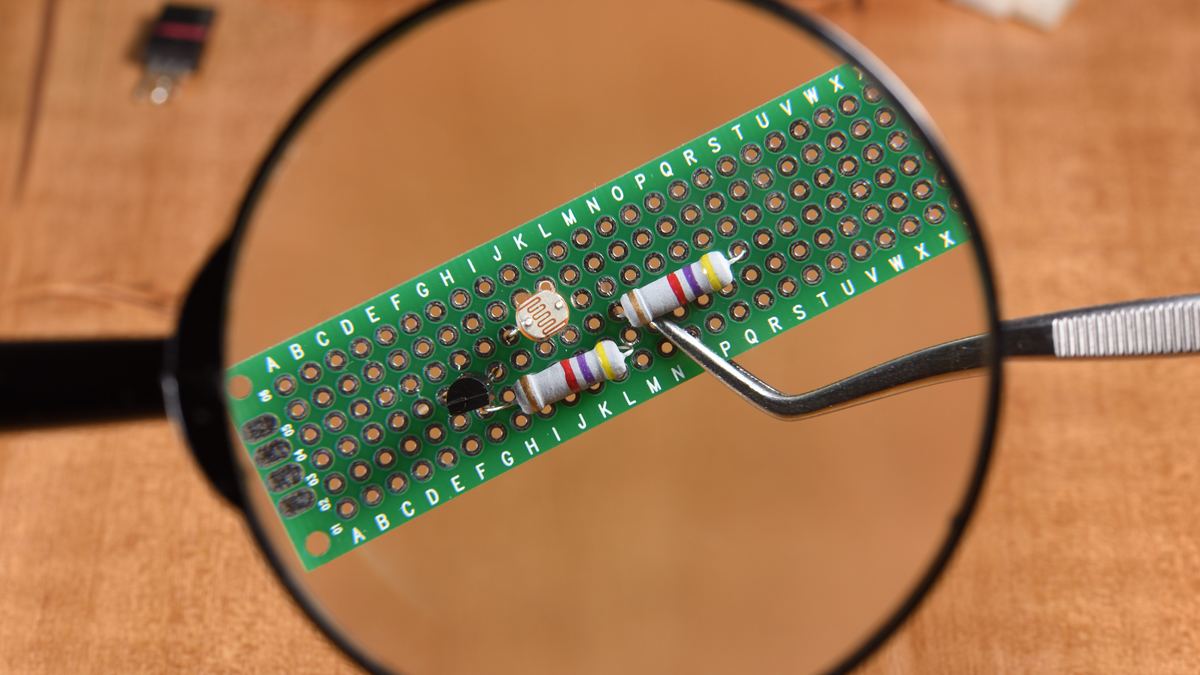
What is Filament Current Sense Resistor?
A Filament Current Sense Resistor is a precision resistor, usually with a very low resistance value, that is placed in series with a filament circuit so that the current flowing through the filament can be measured accurately. The resistor does not power the filament by itself. Its main purpose is to create a small voltage drop that is directly proportional to the current passing through the circuit. By reading that small voltage, a control system, monitoring circuit, or protection stage can determine how much current the filament is drawing at any given moment.
Core concept: In cinematic electronics, filament circuits are important because many lighting and electronic systems rely on stable heating current for proper operation. A projector lamp assembly, a heated cathode inside a vacuum tube, an indicator lamp, or a supporting heater circuit may all depend on a controlled filament current. If the current is too low, the filament may not reach the required temperature. If the current is too high, the filament may overheat, degrade early, or fail completely. The current sense resistor helps engineers and technicians observe that current in a simple, reliable, and cost effective way.
In practical cinema related electronics, this resistor is often used as part of a larger control network. It may work with amplifiers, comparators, analog to digital converters, or microcontrollers. Because the resistor value is very small, it introduces only a limited voltage loss while still providing enough signal for measurement. This makes it highly useful in systems where power efficiency, thermal stability, and reliability are important.
How does Filament Current Sense Resistor Work?
A Filament Current Sense Resistor works by using Ohm’s law. When current passes through a resistor, a voltage appears across it. If the resistor has a known low resistance, the measured voltage can be used to calculate the current. For example, if a resistor has a value of 0.1 ohm and the measured voltage across it is 0.2 volt, the current is 2 amperes. This is a simple but powerful principle used in many electronic monitoring designs.
Operating principle: The resistor is placed in series with the filament so that all filament current passes through it. Since the resistor value is chosen carefully, the resulting voltage drop is small enough that it does not seriously disturb the normal operation of the filament. At the same time, the voltage is large enough to be measured by sensing electronics.
In many cinema systems, the sense voltage is amplified because the voltage across a low value resistor can be very small. A differential amplifier or current sense amplifier may be used to improve accuracy and reject noise. The output from that amplifier can then be sent to a controller, display, protection relay, or automated brightness and power management system.
Protection role: A current sense resistor is also useful for safety. If the filament draws too much current because of a fault, a short circuit, or a failing supply stage, the control system can detect the abnormal condition and reduce power or shut the circuit down. This helps protect expensive lamps, vintage tube components, power transformers, and related cinema electronics.
Dynamic behavior: Filaments often have a lower resistance when cold and a higher resistance when hot. This means the startup current can be much higher than the steady operating current. A filament current sense resistor can help monitor this warm up behavior and allow designers to create soft start systems. Soft start reduces stress on lamps and heater filaments, which is especially valuable in cinema applications where equipment replacement can be expensive and downtime can affect operations.
What are the Components of Filament Current Sense Resistor?
A Filament Current Sense Resistor is not always a standalone part in real equipment. It is often part of a sensing block that includes multiple supporting elements.
Resistive element: The most important component is the low value resistor itself. This element is designed to carry current without significant drift. Materials such as metal strip, metal foil, or specially formulated alloys are often used because they provide good stability and predictable temperature behavior.
Terminal connections: Strong terminals are important because the resistor may handle noticeable current. Poor terminal quality can introduce extra resistance, measurement errors, or overheating. In cinema equipment, where reliability matters, secure solder joints or rugged mounting points are essential.
Protective body or package: Many current sense resistors come in packages designed for heat handling and mechanical stability. The body may be ceramic, molded, or metal supported depending on the application. The package must tolerate electrical stress and nearby heat sources such as lamps, transformers, and power control components.
Sensing pathway: The resistor is usually connected to a measurement circuit. This may include traces, wires, or Kelvin connections. Kelvin connections use separate paths for current carrying and voltage sensing, which improves measurement accuracy by reducing error from lead resistance.
Signal conditioning stage: In many systems, the tiny voltage across the resistor is not read directly. An amplifier, filter, or comparator may be added. This stage improves signal quality, reduces noise, and helps the system make reliable decisions.
Thermal support: Since the resistor dissipates power, thermal design matters. Heat spreading copper, air flow, or careful placement away from temperature sensitive parts may be part of the overall design. A sense resistor that overheats can drift and reduce accuracy.
Control interface: In advanced cinematic electronics, the sensed current signal may go to a microcontroller or monitoring board. This allows automated diagnostics, logging, or adaptive control of filament power.
What are the Types of Filament Current Sense Resistor?
Filament Current Sense Resistors can be classified in several ways based on construction, resistance value, power rating, accuracy, and mounting style.
Low value metal strip type: This is one of the most common types for current sensing. It offers low resistance, good power handling, and relatively stable performance. It is widely used where dependable current monitoring is required.
Wirewound type: Wirewound resistors can handle more power and are useful in robust industrial or legacy cinema systems. However, they may introduce inductance, which can affect performance in rapidly changing circuits. They are often suitable in slower or steady current heater applications.
Metal foil type: This type is known for very high precision and low temperature drift. It is used when accurate measurement is critical. In cinema electronics, it may appear in calibration grade instruments or premium control circuits.
Surface mount type: Surface mount current sense resistors are compact and suitable for modern control boards. They are commonly used in digital monitoring and compact cinema support electronics where board space is limited.
Through hole type: Through hole versions are mechanically strong and often preferred in equipment that faces vibration, repeated heating cycles, or servicing demands. They can be easier to replace in maintenance environments.
High power shunt type: A shunt resistor is a very low resistance resistor intended for current measurement at higher currents. In large lamp power systems or heater supplies, this type can be useful when the filament current is significant.
Precision sense resistor: This type focuses on tight tolerance and low drift. It is selected when repeatable readings are more important than minimum cost.
Application based view: Some resistors are optimized for low side sensing, where the resistor is placed between the load and ground. Others support high side sensing, where the resistor is placed between the power supply and the load. The choice depends on circuit design, measurement requirements, and safety considerations.
What are the Applications of Filament Current Sense Resistor?
Filament Current Sense Resistors are used wherever filament current needs to be monitored, limited, logged, or controlled.
Projector lamp support circuits: In cinema projection systems, lamp assemblies and associated heating circuits can benefit from current monitoring. The resistor helps ensure that the filament current remains within safe limits during startup and steady operation.
Vacuum tube heater monitoring: Some cinema audio equipment, vintage amplifiers, preamplifiers, and specialized control units use vacuum tubes. Their heater filaments must receive the correct current for stable performance and long life. A current sense resistor makes this possible.
Indicator and panel lighting circuits: Control consoles, analog cinema equipment, and display panels may use filament based lamps. Monitoring current can help with maintenance planning and early fault detection.
Soft start systems: Filament current is often high at startup. A sense resistor allows the control system to detect inrush current and apply soft start logic. This reduces stress and improves life expectancy.
Protection circuits: If current rises unexpectedly, the system can respond by shutting down the supply, triggering an alarm, or entering a safe mode. This protects lamps, transformers, wiring, and power regulators.
Diagnostic instrumentation: Service tools and internal monitoring boards can use a filament current sense resistor to measure the health of heater circuits. This helps technicians identify aging components before total failure occurs.
Power management systems: In advanced electronics, the current sense resistor supports power optimization. The system can adjust filament drive for efficiency while maintaining required operating conditions.
What is the Role of Filament Current Sense Resistor in Cinema Industry?
In the cinema industry, reliability, consistency, and equipment protection are extremely important. A Filament Current Sense Resistor supports these goals by giving operators and control systems visibility into current flow in sensitive filament related circuits.
Operational stability: Cinema equipment often runs for long hours and under thermal stress. A small change in current can affect lamp performance, tube behavior, or heater stability. By measuring current, the system can keep operation within safe and predictable limits.
Equipment protection: Cinema hardware can be costly to replace. Projector support electronics, specialized amplifiers, and heritage systems benefit from current sensing because faults can be detected early. This reduces the risk of catastrophic damage.
Maintenance value: Current readings can reveal gradual changes in system health. A filament that draws unusual current may be aging, contaminated, or nearing failure. This information supports preventive maintenance rather than emergency repair.
Performance consistency: In cinema presentation, stable light and sound matter. Filament current sensing helps maintain consistent behavior in circuits where thermal conditions affect output quality. This is useful in both modern control systems and restored legacy equipment.
Integration with automation: Modern cinema environments increasingly depend on smart monitoring. A sense resistor allows data to be collected, compared, and acted on automatically. This contributes to better uptime and smoother operation.
What are the Objectives of Filament Current Sense Resistor?
The objectives of a Filament Current Sense Resistor go beyond simple measurement. It serves several practical engineering purposes.
Current measurement: The primary objective is to provide an accurate way to measure the current flowing through a filament circuit.
Protection against overload: By detecting excessive current, the resistor helps protect the filament and related electronics from thermal or electrical damage.
Support for control systems: The resistor creates a measurable signal that can be used by analog or digital controllers for regulation and feedback.
Improved startup handling: Since cold filaments can draw a large current surge, the resistor helps monitor and manage startup conditions.
Extended component life: Proper current control reduces stress, which can help extend the life of lamps, heaters, and supporting power components.
Maintenance and diagnostics: The resistor supports troubleshooting and health monitoring by revealing real current behavior rather than relying on assumptions.
Energy awareness: Monitoring current makes it easier to manage power efficiently, especially in systems with multiple heating elements or aging components.
What are the Benefits of Filament Current Sense Resistor?
A Filament Current Sense Resistor offers many benefits in cinematic electronics and related systems.
Accuracy: A well chosen sense resistor provides a direct and dependable way to determine current. This makes system monitoring more trustworthy.
Simplicity: The concept is straightforward. A resistor and a voltage measurement stage are often enough to build an effective current sensing solution.
Low cost: Compared with more complex current sensing methods, a resistor based approach is often economical while still offering excellent performance.
Fast response: The voltage across the resistor changes immediately with current. This allows the system to detect surges, faults, and changes quickly.
Compact design: Many sense resistors are physically small and easy to integrate into control boards or power modules.
Better protection: The resistor supports shutdown, warning, and control functions that reduce the chance of damage.
Long term reliability: High quality current sense resistors are stable and durable. They can provide dependable service over long operating periods.
Support for smart systems: Their output can be used by microcontrollers, monitoring software, and automated maintenance tools.
Useful for preventive maintenance: Regular current monitoring can reveal early symptoms of wear, helping operators replace parts before failure affects cinema operation.
What are the Features of Filament Current Sense Resistor?
The key features of a Filament Current Sense Resistor make it suitable for demanding equipment.
Low resistance value: It is designed to create only a small voltage drop so that the filament still receives most of the intended supply voltage.
High power capability: Even a low resistance resistor can dissipate significant power when current is high. Good sense resistors are built to handle that safely.
Tight tolerance: Precision matters in current measurement. Many sense resistors have narrow tolerance values for better accuracy.
Low temperature coefficient: Resistance changes with temperature. A resistor with a low temperature coefficient provides more stable readings across operating conditions.
Strong thermal performance: Good heat handling helps the resistor remain reliable and accurate over time.
Mechanical durability: In professional equipment, the resistor must withstand vibration, repeated heating cycles, and long service periods.
Compatibility with sensing amplifiers: The resistor is usually designed to work well with amplifier and monitoring circuits.
Availability in multiple packages: Different mounting styles allow use in compact boards, power assemblies, and service friendly designs.
What are the Examples of Filament Current Sense Resistor?
Examples of Filament Current Sense Resistor can be understood by looking at typical resistor values and use cases rather than specific brand names.
Example in a projector heater circuit: A 0.1 ohm resistor rated for suitable power may be placed in series with a filament supply. If the heater draws 3 amperes, the resistor develops 0.3 volt. The control circuit reads this value and confirms that the filament is operating normally.
Example in a vacuum tube amplifier: A 0.22 ohm precision resistor can be placed in the heater return path. The measured voltage reveals whether the tube heater current is correct. This helps protect audio quality and tube life in cinema sound support equipment.
Example in a soft start controller: A low value shunt resistor may be used to monitor inrush current during lamp startup. If the current rises too sharply, the controller slows the ramp up or temporarily limits power.
Example in a maintenance board: A service module may include a current sense resistor connected to a digital display or diagnostic interface. Technicians can quickly verify the health of a filament circuit without invasive testing.
Example in legacy cinema restoration: Restored analog cinema equipment may use robust through hole wirewound or metal strip sense resistors to monitor heater supplies while preserving the original operational character of the system.
What is the Definition of Filament Current Sense Resistor?
The definition of a Filament Current Sense Resistor is a low resistance resistor placed in series with a filament circuit for the purpose of producing a measurable voltage proportional to the filament current, allowing monitoring, control, protection, or diagnostics of the circuit.
Technical definition: It is a current sensing component that converts current information into a voltage signal through a known resistance value. The voltage can then be interpreted by analog or digital circuitry.
Functional definition: It is a practical tool for observing filament behavior without directly interrupting or greatly disturbing the normal operation of the load.
Industry oriented definition: In cinematic electronics, it is a support component used to maintain safe, stable, and efficient operation of filament based or heater related systems.
What is the Meaning of Filament Current Sense Resistor?
The meaning of Filament Current Sense Resistor can be explained in simple terms. It means a resistor that helps a circuit know how much current a filament is using.
Practical meaning: It acts like a silent observer inside the circuit. It does not usually create the main function of the system, but it tells the system whether the filament is operating correctly.
Engineering meaning: It is a feedback component. Feedback is essential in modern electronics because it allows equipment to react intelligently instead of operating blindly.
Cinema meaning: In the cinema industry, the resistor represents control, protection, and consistency. It helps preserve performance and supports dependable operation of equipment that may be central to projection, sound, or supporting infrastructure.
What is the Future of Filament Current Sense Resistor?
The future of Filament Current Sense Resistor technology will likely be shaped by smarter monitoring, better materials, and stronger integration with digital control systems.
Greater precision: Future designs will continue to improve in tolerance, thermal stability, and long term reliability. This will make current measurements more accurate even in hot and demanding environments.
Smaller packages: As control electronics become more compact, sense resistors will also continue to shrink while maintaining power capability.
Better thermal behavior: New materials and improved package designs will help reduce drift caused by heat. This is important in cinema systems where nearby lamps, power supplies, and enclosed cabinets create challenging thermal conditions.
Stronger smart integration: Sense resistors will increasingly work with digital controllers, remote monitoring dashboards, and predictive maintenance software. Instead of simply detecting faults, future systems may predict them before they happen.
Use in restoration and modernization: Even as cinema technology evolves, many theaters and specialist facilities maintain or restore legacy equipment. Filament current sense resistors will continue to play a role in upgrading reliability without changing the core character of older systems.
Energy efficient operation: Future cinema electronics will place greater emphasis on energy awareness. Current sensing will help systems optimize power delivery while protecting sensitive components.
Expanded diagnostic value: Advanced controllers may compare filament current trends over time, detect abnormal warm up patterns, and recommend service intervals. This makes the humble sense resistor an important part of intelligent equipment management.
Summary
- Filament Current Sense Resistor is a low resistance resistor used to measure the current flowing through a filament circuit.
- It works by creating a small voltage drop that is proportional to the current, which can then be measured and interpreted.
- It is widely used for monitoring, protection, soft start control, diagnostics, and power management.
- Common types include metal strip, wirewound, metal foil, surface mount, through hole, and shunt style resistors.
- Important features include low resistance, tight tolerance, strong thermal performance, and stable long term behavior.
- In the cinema industry, it supports reliable operation, equipment protection, maintenance planning, and performance consistency.
- Its objectives include current measurement, overload protection, startup control, longer component life, and better diagnostics.
- Its benefits include accuracy, simplicity, low cost, fast response, compact size, and compatibility with smart monitoring systems.
- In simple terms, it helps the system know whether a filament is drawing the correct current.
- Its future is closely linked with precision electronics, predictive maintenance, digital integration, and improved energy efficiency.

