

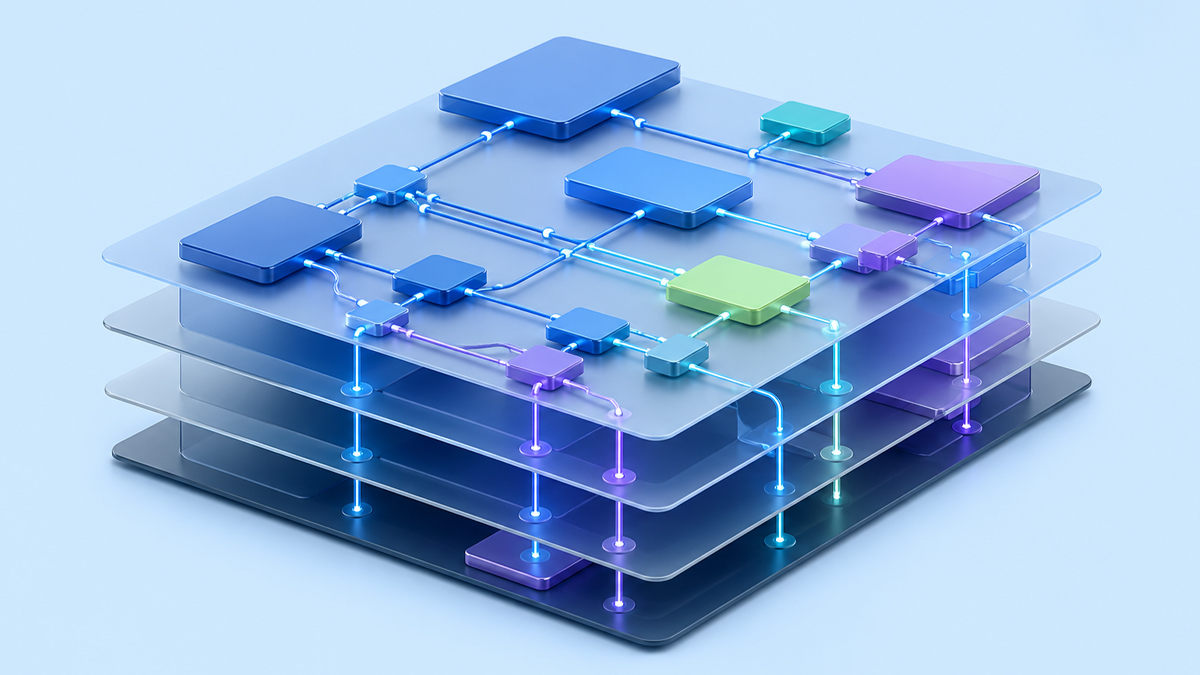
What is Frame Graph Architecture?
Frame Graph Architecture is a structured way of organizing rendering work in a real time rendering system. It represents each rendering operation as a node in a graph and represents the flow of resources between those operations as connections. In cinema related real time rendering, this architecture helps manage complex visual tasks such as lighting, shadows, reflections, post processing, compositing, virtual production previews, and final pixel output.
A frame graph describes what needs to be rendered in a frame, which resources are needed, and how each rendering pass depends on another. Instead of writing a fixed sequence of rendering commands manually, developers define rendering passes and their resource relationships. The engine then decides the correct order of execution, manages memory, and removes unnecessary work.
Rendering Context: In real time rendering, a frame is a single image generated many times per second. For cinematic technologies, each frame may contain detailed characters, digital sets, volumetric effects, camera motion, depth of field, color grading, and lighting effects. Frame Graph Architecture gives the renderer a clear structure to handle these elements efficiently.
Cinema Industry Importance: Modern cinema uses real time tools for virtual production, previs, techvis, LED wall rendering, on set visualization, and interactive review. These workflows need high quality images at fast speeds. Frame Graph Architecture supports this by making rendering pipelines more flexible, organized, and performance focused.
How does Frame Graph Architecture Work?
Frame Graph Architecture works by breaking a frame into smaller rendering passes. Each pass performs a specific task, such as generating shadow maps, rendering geometry, applying lighting, computing reflections, or adding post processing effects. These passes are connected by resources such as textures, buffers, depth maps, color targets, and intermediate images.
Pass Declaration: Each rendering pass declares what it reads and what it writes. For example, a shadow pass may write a shadow map, while a lighting pass may read that shadow map. This declaration allows the frame graph system to understand dependencies without the developer manually controlling every detail.
Dependency Resolution: Once the graph knows the relationships between passes, it can automatically order them. A pass that produces a resource must run before a pass that consumes it. This prevents errors and ensures that every effect receives the correct input.
Resource Lifetime Management: The frame graph tracks when a resource is created, used, and no longer needed. This helps the engine reuse memory. For example, if two temporary textures are never needed at the same time, they may share the same memory space. This reduces memory pressure, which is very important for high resolution cinematic rendering.
Execution Scheduling: After the graph is built, the system compiles it into a practical execution plan. The renderer then sends commands to the graphics hardware in the correct order. Some advanced frame graph systems can also identify opportunities for parallel execution, asynchronous compute, and better GPU utilization.
Optimization Process: The graph can remove unused passes, combine compatible operations, avoid unnecessary resource transitions, and improve synchronization. This means the renderer can deliver complex cinematic visuals while using hardware resources more intelligently.
What are the Components of Frame Graph Architecture?
Rendering Passes: Rendering passes are the main building blocks of a frame graph. Each pass represents a task in the frame. Common examples include geometry pass, shadow pass, lighting pass, reflection pass, transparency pass, bloom pass, tone mapping pass, and final presentation pass.
Resource System: Resources include textures, buffers, render targets, depth buffers, stencil buffers, acceleration structures, and temporary intermediate data. The frame graph records how these resources are used and when they are needed.
Graph Nodes: Nodes represent operations. A node can be a rendering pass, compute pass, transfer pass, or post processing operation. Each node contains information about input resources, output resources, execution rules, and sometimes hardware queue requirements.
Graph Edges: Edges represent dependency relationships. If one pass writes a texture and another pass reads it, an edge connects them. These connections allow the frame graph to understand the correct execution order.
Compiler or Builder: The frame graph compiler analyzes the declared graph and converts it into an executable plan. It sorts passes, validates dependencies, allocates memory, manages resource states, and prepares command lists.
Resource Aliasing System: Resource aliasing allows temporary resources to share memory when their lifetimes do not overlap. This is especially useful in cinematic rendering because many effects require large intermediate buffers.
Synchronization Manager: Graphics hardware needs proper synchronization between operations. The frame graph can insert barriers, transitions, and synchronization points automatically. This reduces mistakes and improves stability.
Execution Backend: The backend sends the final rendering commands to graphics APIs such as Vulkan, DirectX, Metal, or console graphics systems. The frame graph itself is often API independent, while the backend handles platform specific details.
Debugging and Visualization Tools: Many frame graph systems include visual tools that show the graph structure, pass order, resource lifetime, memory usage, and performance cost. These tools are very useful for film studios, game engines, and virtual production teams.
What are the Types of Frame Graph Architecture?
Static Frame Graph: A static frame graph has a mostly fixed structure. The same passes are executed in a predictable order each frame. This type is useful for stable cinematic pipelines where the rendering process does not change much during a sequence.
Dynamic Frame Graph: A dynamic frame graph is rebuilt or adjusted every frame based on scene conditions. If a scene does not need reflections, volumetric fog, or motion blur, those passes can be skipped. This type is useful for real time cinematic tools where scenes and camera views change quickly.
Data Driven Frame Graph: A data driven frame graph allows artists, technical directors, or rendering engineers to define rendering workflows through configuration files, tools, or visual editors. This can reduce the need for hard coded rendering changes.
Declarative Frame Graph: In a declarative system, the developer declares the desired passes and resource dependencies, while the system decides how to execute them. This improves clarity and reduces manual scheduling work.
Task Based Frame Graph: A task based frame graph focuses on breaking rendering work into tasks that can run in parallel where possible. This is valuable for modern multicore CPUs and advanced graphics hardware.
API Specific Frame Graph: Some frame graph systems are designed around a specific graphics API. For example, a renderer may use a graph specifically optimized for Vulkan or DirectX 12. These systems can take advantage of low level control but may require more platform specific work.
Engine Level Frame Graph: This type is integrated deeply into a rendering engine. It controls not only rendering passes but also lighting systems, post processing, editor preview, cinematic cameras, and platform optimization.
What are the Applications of Frame Graph Architecture?
Real Time Rendering: Frame Graph Architecture is widely used to organize real time rendering pipelines. It helps manage complex effects while keeping frame time predictable.
Virtual Production: In virtual production, scenes are rendered live on LED walls or preview monitors. Frame graph systems help handle camera tracked rendering, lighting, reflections, and post processing in real time.
Previsualization: Previs teams use real time tools to block scenes, plan camera angles, and test action sequences. Frame graph architecture supports fast rendering while allowing different visual layers and effects to be enabled or disabled.
Technical Visualization: Techvis focuses on technical planning for shots, including camera movement, lens choices, set layout, and digital environment placement. A well organized frame graph allows these views to render accurately and efficiently.
On Set Visualization: Directors and cinematographers can preview digital characters, environments, or effects during filming. Frame graphs help keep the renderer responsive and stable under changing conditions.
Real Time Compositing: Frame graph systems can manage multiple image layers, masks, depth data, lighting passes, and final color operations. This is useful when combining live action footage with digital elements.
Interactive Lighting Review: Cinematic lighting teams can adjust lights and see results quickly. Frame graph architecture makes it easier to update only the required passes and avoid unnecessary rendering work.
High Quality Post Processing: Effects such as bloom, tone mapping, color grading, depth of field, motion blur, lens distortion, film grain, and anti aliasing can be organized clearly through a frame graph.
Game Engine Cinematics: Many cinematic scenes are now created in real time engines. Frame graphs allow complex visual pipelines to be maintained inside engines used for cinematic storytelling.
What is the Role of Frame Graph Architecture in Cinema Industry?
Frame Graph Architecture plays an important role in connecting real time rendering technology with cinematic production needs. The cinema industry demands images that are visually rich, emotionally expressive, and technically consistent. Real time rendering must support this demand while staying fast enough for interactive workflows.
Production Efficiency: Frame graph systems reduce the manual complexity of managing rendering passes. This allows technical teams to build reliable pipelines that can be reused across scenes, shots, and productions.
Creative Flexibility: Directors, cinematographers, lighting artists, and visual effects teams can experiment more freely when rendering is fast and organized. Frame graph architecture helps engines support quick changes in lighting, camera movement, materials, and effects.
Virtual Production Support: LED wall productions need accurate real time output that matches camera tracking and stage lighting. A frame graph helps organize the rendering steps needed for these demanding environments.
Consistency Across Shots: Cinema projects often require visual consistency. A frame graph can help standardize how effects are applied across different shots, which supports a more controlled final look.
Collaboration Between Teams: Rendering engineers, technical artists, and creative departments can better understand the rendering process when it is represented as a graph. This improves communication and reduces confusion during production.
Performance Reliability: Film sets are expensive, and real time systems must be dependable. Frame graph architecture helps avoid unnecessary rendering work, manages memory carefully, and improves frame stability.
Bridge Between Offline and Real Time Workflows: Traditional cinema rendering often uses offline rendering, where each frame can take a long time to compute. Frame graph architecture helps real time engines approach cinematic quality by organizing advanced rendering techniques in a scalable way.
What are the Objectives of Frame Graph Architecture?
Improve Rendering Organization: One objective is to make the rendering pipeline easier to understand and manage. Instead of having a long, hard coded sequence of commands, the renderer uses a graph that clearly shows relationships between passes and resources.
Automate Dependency Handling: The frame graph should understand which operations depend on others. This reduces manual errors and makes complex pipelines safer to modify.
Optimize Resource Usage: A major objective is to reduce memory waste. By tracking resource lifetimes, the frame graph can reuse memory and avoid keeping temporary resources longer than necessary.
Increase Performance: Frame graph systems help improve performance by removing unused passes, reducing unnecessary synchronization, and enabling better scheduling.
Support Scalability: Cinematic rendering pipelines grow over time. New effects, platforms, camera systems, and production requirements can be added more easily when the architecture is modular.
Enable Flexible Rendering Features: Different shots may need different effects. Frame graph architecture allows features to be added, removed, or adjusted based on scene requirements.
Improve Debugging: The graph structure makes it easier to inspect how a frame is produced. Developers can identify expensive passes, unused resources, incorrect dependencies, or memory problems.
Support Modern Graphics APIs: New graphics APIs require careful control over resource states, barriers, and synchronization. Frame graph architecture helps manage this complexity in a systematic way.
What are the Benefits of Frame Graph Architecture?
Better Performance: Frame graph systems can improve performance by removing unnecessary passes, scheduling work efficiently, and reducing memory bandwidth pressure.
Lower Memory Usage: Since the graph understands resource lifetimes, temporary buffers and textures can be reused. This is useful when rendering high resolution cinematic images with many effects.
Cleaner Code Structure: Rendering code becomes easier to maintain because each pass can be defined separately. This reduces the complexity of large rendering systems.
Fewer Manual Errors: Manual resource transitions and synchronization can cause bugs. A frame graph reduces these risks by automating many of these tasks.
Easier Feature Integration: New rendering features can be added as new passes with declared inputs and outputs. This makes the system more modular.
Improved Debugging: Developers can visualize the graph and inspect resource usage. This makes it easier to understand why a rendering result looks wrong or why performance is poor.
Better Platform Adaptation: Different hardware platforms have different strengths. A frame graph can help adjust execution strategies for desktop workstations, consoles, cloud rendering systems, and LED wall stages.
Enhanced Cinematic Quality: By organizing complex effects clearly, frame graph architecture makes it easier to combine high quality lighting, shadows, reflections, volumetrics, and post processing into a consistent final frame.
Support for Parallel Work: Some rendering tasks can run at the same time if they do not depend on each other. Frame graphs can expose these opportunities and improve hardware utilization.
What are the Features of Frame Graph Architecture?
Pass Based Design: The architecture is built around rendering passes. Each pass performs a defined operation, making the pipeline easier to understand.
Automatic Ordering: The frame graph can determine the correct order of operations based on dependencies.
Resource Tracking: Textures, buffers, and other resources are tracked from creation to final use. This improves memory management and correctness.
Lifetime Analysis: The system knows when resources are needed and when they can be released or reused.
Dependency Validation: The graph can detect missing inputs, circular dependencies, and incorrect resource usage.
Memory Aliasing: Temporary resources can share memory when their usage does not overlap. This can significantly reduce memory consumption.
Pass Culling: If a pass does not contribute to the final output, the graph can remove it from execution.
Synchronization Support: The system can insert barriers and transitions required by modern graphics APIs.
Debug Visualization: Developers can view the graph structure, pass costs, resource flow, and memory lifetime.
Scalable Extension: New effects and rendering features can be added without rewriting the entire pipeline.
Hardware Awareness: Advanced systems can consider graphics queues, compute queues, async work, and platform specific optimization.
What are the Examples of Frame Graph Architecture?
Shadow Rendering Example: A shadow pass creates a depth map from the point of view of a light. The lighting pass then reads that shadow map to darken areas that are not directly visible to the light. The frame graph records this dependency and ensures the shadow pass runs first.
Deferred Rendering Example: A geometry pass writes material information into multiple textures, such as color, normals, depth, and roughness. A lighting pass then reads these textures to calculate illumination. Later passes may apply reflections, ambient occlusion, bloom, and tone mapping.
Post Processing Example: A rendered scene may pass through several effects. First, the image is tone mapped. Then bloom is added. Then color grading is applied. Then film grain and lens effects may be added. A frame graph organizes each step and manages the temporary images used between them.
Virtual Production Example: An LED wall system may render a digital background based on the physical camera position. The graph may include camera tracking data, environment rendering, color correction, latency compensation, and final display output. Each stage depends on accurate timing and resource flow.
Reflection Rendering Example: A reflection pass may render a lower resolution version of the scene, generate screen space reflections, or sample reflection probes. The final lighting pass then reads this reflection data to create glossy surfaces.
Volumetric Fog Example: A volumetric pass computes light scattering in fog or atmosphere. Later passes combine that result with the main scene. A frame graph helps manage the heavy intermediate buffers required for this effect.
Motion Blur Example: A motion vector pass stores how pixels move between frames. A motion blur pass reads those vectors and the color image to create a cinematic blur effect. The graph ensures that the motion vector data exists before the blur pass begins.
What is the Definition of Frame Graph Architecture?
Frame Graph Architecture is a rendering pipeline design method that represents frame generation as a graph of rendering passes and resource dependencies. It defines how each visual operation contributes to the final image and how data moves between those operations.
Technical Definition: It is an abstraction layer that allows rendering systems to declare passes, resources, dependencies, and execution requirements, then compile that information into an optimized sequence of graphics commands.
Practical Definition: It is a smart organizer for rendering work. It helps the engine decide what to render first, what data to keep, what data to reuse, and what work can be skipped.
Cinema Based Definition: In cinematic technologies, Frame Graph Architecture is a system that helps real time renderers produce complex film quality images by managing shadows, lighting, effects, compositing, and display output in a clear and efficient structure.
What is the Meaning of Frame Graph Architecture?
The meaning of Frame Graph Architecture can be understood by looking at the words separately. A frame is one image in a sequence. A graph is a structure made of connected nodes. Architecture means the design and organization of a system. Together, Frame Graph Architecture means the organized graph based design of how one rendered frame is created.
Simple Meaning: It means arranging the rendering process as connected steps rather than a fixed list of commands.
Rendering Meaning: It means every pass, resource, and dependency is clearly described so the renderer can build the final image correctly.
Production Meaning: It means the visual pipeline becomes easier to change, optimize, and debug. This is especially important in cinematic workflows where image quality and production speed both matter.
Creative Meaning: It gives creative teams more freedom because the technical system can support complex effects without becoming unmanageable.
What is the Future of Frame Graph Architecture?
The future of Frame Graph Architecture is closely connected to the future of real time cinematic rendering. As cinema production uses more real time tools, rendering pipelines will become more complex. Frame graph systems will become more important because they provide structure, automation, and optimization.
More Advanced Automation: Future frame graphs may use smarter systems to automatically schedule work, reduce memory use, and choose the best rendering path for each scene.
Better Integration with Ray Tracing: Real time ray tracing is becoming more common in cinematic workflows. Frame graphs will help organize ray tracing passes, denoising passes, lighting accumulation, reflection data, and hybrid rendering methods.
Closer Connection with AI Tools: AI based denoising, upscaling, frame interpolation, segmentation, and relighting may become regular parts of real time rendering pipelines. Frame graph architecture can provide a clear way to insert and manage these AI processes.
Virtual Production Growth: As LED wall stages and real time sets become more common, frame graphs will help manage complex display pipelines, camera synchronization, color correction, and live compositing.
Cloud Rendering and Remote Collaboration: Future productions may use cloud based real time rendering and collaborative review systems. Frame graphs can help distribute rendering tasks and manage resource dependencies across different systems.
Artist Friendly Graph Tools: More visual editors may allow artists and technical directors to inspect or modify rendering graphs without writing low level code. This can improve collaboration between engineering and creative teams.
Higher Cinematic Quality: Frame graph architecture will support increasingly advanced effects, including realistic global illumination, complex transparency, volumetric lighting, physically based cameras, and detailed post processing.
Greater Hardware Efficiency: Modern GPUs are becoming more parallel and more specialized. Future frame graph systems will likely make better use of graphics queues, compute queues, ray tracing hardware, and memory hierarchies.
Summary
- Frame Graph Architecture is a structured method for organizing the rendering process of each frame in real time rendering.
- It represents rendering operations as graph nodes and resource dependencies as connections between those nodes.
- It helps manage complex cinematic effects such as lighting, shadows, reflections, volumetrics, motion blur, tone mapping, and compositing.
- It improves rendering performance by removing unused work, ordering passes correctly, and enabling better scheduling.
- It reduces memory usage by tracking resource lifetimes and allowing temporary resources to share memory.
- It supports virtual production, previs, techvis, on set visualization, interactive lighting review, and real time cinematic workflows.
- It helps rendering engineers, technical artists, and creative teams work with clearer and more maintainable pipelines.
- It is especially useful with modern graphics APIs because it helps manage synchronization, resource transitions, and command execution.
- Its future is linked with real time ray tracing, AI assisted rendering, cloud production, LED wall stages, and artist friendly rendering tools.
- In the cinema industry, Frame Graph Architecture is becoming an important foundation for producing high quality visuals with interactive speed and reliable performance.

