

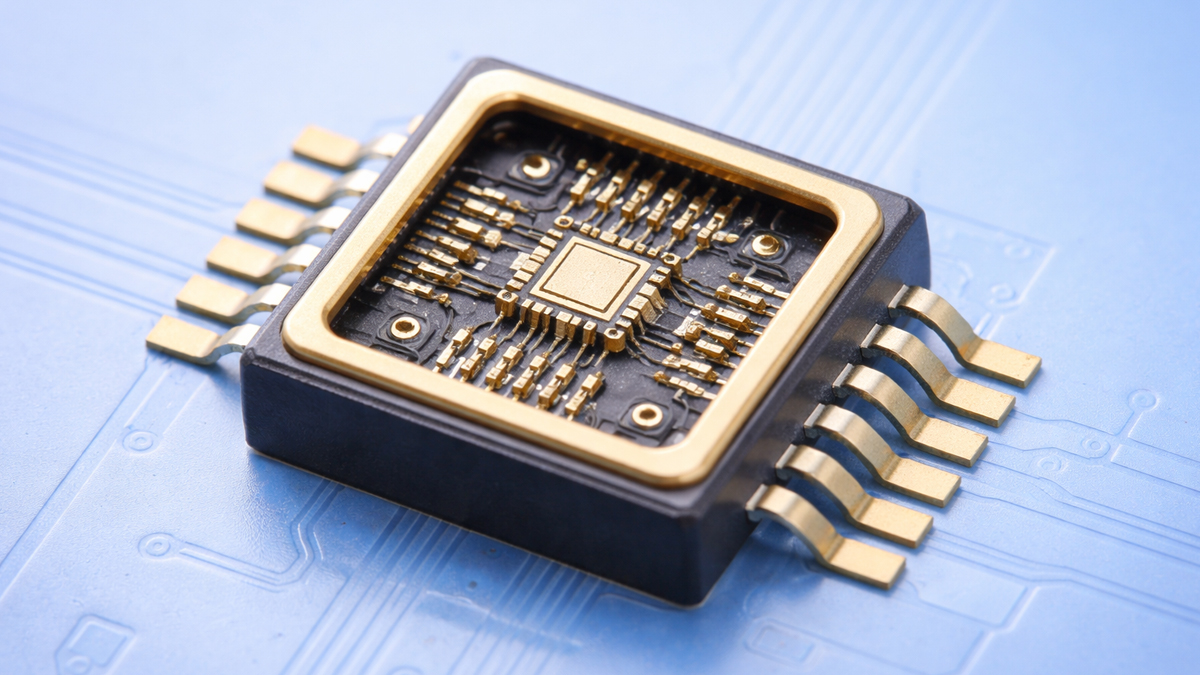
What is MEMS Magnetometer?
A MEMS magnetometer is a miniature magnetic field sensor built for compact electronic systems that need to detect the strength and direction of magnetic fields along multiple axes. In practical terms, it measures the surrounding magnetic environment, including the Earths magnetic field, and converts that information into digital data that an electronic system can use for heading, orientation, tracking, correction, and control. In modern sensor portfolios, these devices are usually offered as tiny 3 axis digital magnetic sensors that fit into very small packages and operate with very low power, which makes them suitable for portable, embedded, and space constrained equipment.
Within cinematic electronics, a MEMS magnetometer matters because many film and broadcast tools depend on reliable orientation data. Camera rigs, stabilization systems, virtual production tools, motion tracking hardware, drones, and handheld devices often use inertial sensing to understand where the equipment is pointing and how it is moving. A magnetometer adds an absolute heading reference to that sensing chain, which helps reduce drift and improves the systems ability to maintain a stable directional understanding over time. This is especially useful when the device is already combining data from a gyroscope and an accelerometer in a 9 axis sensing workflow.
How does MEMS Magnetometer Work?
Basic principle: A MEMS magnetometer senses magnetic flux along the X, Y, and Z axes. The sensor element reacts to an external magnetic field, and internal electronics measure that reaction and translate it into usable data. Depending on the design, the detection mechanism may rely on Hall technology, anisotropic magnetoresistance, giant magnetoresistance, or tunneling magnetoresistance. After detection, the signal is amplified, filtered, digitized, temperature compensated, and sent to the host processor through interfaces such as I2C or SPI. The result is a live stream of magnetic vector data that software can analyze in real time.
Orientation workflow: On its own, a magnetometer tells the system how the device is aligned relative to the local magnetic field. When paired with an accelerometer and gyroscope, the system can compute a more stable estimate of absolute orientation. In this kind of 9 axis sensor fusion, the gyroscope reacts quickly, the accelerometer helps with tilt, and the magnetometer anchors heading. This combination is important because it helps electronic systems understand both motion and direction in a more complete way.
Practical caution: Magnetometers are sensitive to nearby metal parts, motors, power wiring, magnets, and electromagnetic noise. Because of this, the sensor usually needs calibration so that hard iron and soft iron distortions can be corrected. In cinema tools, this matters because a camera cage, gimbal motor, battery plate, wireless transmitter, or follow focus motor can all distort readings if the sensor is badly placed or poorly calibrated. So the device works best when good mechanical placement, calibration routines, and sensor fusion algorithms are used together.
What are the Components of MEMS Magnetometer?
Sensor core: The heart of a MEMS magnetometer is the magnetic sensing element. This is the part that reacts to an external magnetic field. Different products use different technologies. Some devices use Hall sensor technology, some use AMR, and others use TMR. Even though the internal physics differ, the purpose is the same, which is to detect magnetic field changes accurately and consistently.
Signal chain: After the sensing element, the magnetometer includes analog front end circuitry, amplification stages, filtering blocks, an analog to digital converter, and compensation logic. These sections clean the raw signal and prepare it for software use. Many devices also include factory trimming, self test routines, operating modes such as continuous or single measurement mode, and internal temperature handling to improve stability. These features are important because real world orientation systems are only as good as the quality of the magnetic data they receive.
System interface: A practical magnetometer also needs communication and integration features. Many modern sensors provide digital output through I2C and SPI. Around the chip itself, the full implementation may also include a package substrate, power management, clocking, firmware support, and calibration software. In a cinema device, that larger system context is what turns a tiny sensor into a useful orientation tool.
What are the Types of MEMS Magnetometer?
Technology based types: One useful way to classify magnetometers is by sensing principle. Hall effect magnetometers detect voltage changes created by magnetic fields across a current carrying structure. Magnetoresistive types detect magnetic fields through resistance changes, and this family includes AMR, GMR, and TMR variants. Fluxgate magnetometers use a different concept involving magnetic cores and coils, and they are often used where higher precision field measurement is needed. In compact electronics, Hall, AMR, and TMR are especially relevant because they can be implemented in very small, low power packages.
Measurement based types: Magnetometers can also be divided into scalar and vector forms. Scalar devices measure magnetic field magnitude only, while vector devices measure both magnitude and direction along one or more axes. Most modern electronics use 3 axis vector magnetometers because they provide the directional data needed for navigation, heading, and attitude estimation. This is why 3 axis digital magnetic sensors are common in consumer, industrial, and embedded motion systems.
Integration based types: Another distinction is between standalone magnetometers and combined motion sensors. A standalone part measures magnetic field only, while a combined 9 axis device or module integrates a magnetometer with an accelerometer and gyroscope. For cinema electronics, both approaches are useful. Standalone parts may offer flexibility and placement advantages, while integrated motion units simplify design and help sensor fusion workflows.
What are the Applications of MEMS Magnetometer?
General electronics use: MEMS magnetometers are widely used for electronic compasses, indoor navigation, dead reckoning, head orientation, gaming, robotics, drones, AR, and VR. These sensors are used in such cases because they provide low power magnetic field awareness in a very small footprint. They also support motion aware interfaces, positional awareness, and spatial computing systems that need a stable sense of direction.
Industrial and embedded use: Beyond consumer devices, these sensors are used in position sensing, general purpose magnetic field measurement, and system monitoring. Because they are digital, compact, and increasingly fast, they fit well into embedded platforms that need quick orientation updates or magnetic event detection. Some modern parts support high output data rates and improved robustness after field disturbance, which broadens their usefulness in dynamic environments.
Cinema related use: In film technology, the practical applications include camera stabilization support, camera heading awareness, motion capture wearables, virtual production camera tracking support, drone camera systems, and orientation correction in portable imaging gear. This cinema mapping is a direct industry application of the same IMU and magnetic orientation principles already used in tracking, AR, and motion systems.
What is the Role of MEMS Magnetometer in Cinema Industry?
Heading reference in moving rigs: In the cinema industry, a MEMS magnetometer plays a supporting but highly valuable role by giving electronic systems a stable sense of direction. A gyroscope is excellent for short term rotational motion, but it tends to drift over time. A magnetometer can provide a heading reference that helps correct that drift when the magnetic environment is suitable. This is particularly useful in gimbals, handheld stabilizers, robotic heads, camera support systems, and body mounted motion hardware where preserving directional consistency matters for shot repeatability and smooth operation.
Backup and enhancement for tracking: Virtual production and motion tracking often combine multiple data sources. Inertial measurement units attached to cameras provide crucial motion data and can supplement optical tracking, especially when optical systems face occlusion or interference. Inertial workflows use IMUs containing gyroscopes, magnetometers, and accelerometers. From a cinema systems perspective, this means the magnetometer helps strengthen the orientation layer of hybrid tracking solutions, even if it is not the only tracking input.
Support for mobile and aerial cinematography: Modern lightweight cameras and drone based rigs rely on compact sensor systems because space, weight, and power are limited. Internal IMU data can be used for stabilization in camera products, and compass assisted modes can improve long term heading stability in gimbal related workflows, while also warning that magnetic interference must be managed. For cinema crews, this means a magnetometer is most useful when it is treated as part of a carefully calibrated sensing ecosystem rather than as a magic standalone fix.
What are the Objectives of MEMS Magnetometer?
Primary objective: The first objective of a MEMS magnetometer is to measure magnetic field vectors accurately enough for practical decision making inside an electronic system. That can mean determining heading, assisting orientation estimation, detecting magnetic changes, or supporting navigation. A good sensor must do this while staying small, energy efficient, digitally accessible, and stable across normal operating conditions.
System objective: The second objective is to improve the quality of motion understanding when combined with other sensors. In 9 axis fusion, the magnetometer gives the system an Earth referenced directional cue that helps convert relative motion sensing into more meaningful absolute orientation. This reduces the burden on the gyroscope alone and makes long running motion systems more useful.
Cinema objective: In cinematic electronics specifically, the objective is not only measurement but dependable shot support. The goal is to help rigs know where they are pointing, help tracking systems stay aligned, help virtual environments match real camera direction, and help compact imaging devices remain consistent during motion. In other words, the magnetometer supports reliability, continuity, and repeatability across electronically assisted filmmaking.
What are the Benefits of MEMS Magnetometer?
Compactness and efficiency: One major benefit is that these sensors are extremely small and low power. MEMS and related miniature magnetic sensors are designed for embedded electronics where board area, mass, and battery life matter. This makes them ideal for compact camera accessories, wearables, small control units, drones, and portable cinema tools.
Better orientation awareness: Another benefit is improved directional stability when the sensor is fused with gyroscope and accelerometer data. This helps systems estimate absolute orientation more robustly and reduces the long term heading uncertainty that pure inertial integration can create. For cinema use, that can translate into better camera alignment awareness and more dependable movement data.
Broad design flexibility: Modern magnetometers are available with different dynamic ranges, communication interfaces, operating modes, and sensing technologies. Designers can choose parts optimized for low power, high speed, low noise, high accuracy, or tiny package size. That flexibility helps cinema equipment makers tailor the sensing approach to the rig, budget, and shooting environment.
What are the Features of MEMS Magnetometer?
Core features: Common features include 3 axis measurement, digital output, low power operation, small package size, and compatibility with embedded buses such as I2C and SPI. Many devices also support interrupt generation, self test, multiple power modes, and continuous or triggered measurement modes. These are not marketing extras only. They are practical design tools that help the host system balance speed, precision, and power consumption.
Performance features: Depending on the product family, a magnetometer may also offer high output data rate, low noise, wide full scale range, field shock recovery, degaussing or set reset support, and very fine digital resolution. These performance features help the sensor remain useful in moving, noisy, and electronically crowded environments.
Cinema relevant features: For cinematic electronics, the most valuable features are stability, fast update behavior, compact integration, and reliable fusion with the rest of the motion stack. A feature only matters on set if it helps the hardware remain predictable during movement, recalibration, transport, and repeated setup. That is why field robustness and clean digital integration matter just as much as raw sensitivity.
What are the Examples of MEMS Magnetometer?
Product examples: Bosch BMM350 is a 3 axis magnetic sensor based on TMR technology and is positioned for AR, VR, head orientation, magnetic compass, gaming, and dead reckoning. ST LIS2MDL is an ultralow power 3 axis digital magnetic sensor with a stated ±50 gauss range and I2C and SPI connectivity. AKM AK09919C is a 3 axis electronic compass IC that uses Hall sensor technology, while AKM AK09940A is a 3 axis electronic magnetometer using TMR elements for very low noise performance.
Additional examples: MEMSIC offers several AMR based magnetic sensors such as the MMC5983MA and MMC5603NJ, with features like high resolution, high output data rate, and strong heading accuracy. These parts show how manufacturers optimize for different balances of size, noise, precision, and speed. In many real products, the magnetometer may appear as a separate chip or as part of a 9 axis motion sensing platform that joins magnetic sensing with inertial sensing.
Cinema context examples: In cinematic electronics, the end user may not see the magnetometer listed on the outside of the device, but it may exist inside an IMU, a tracking module, a stabilizer controller, a drone payload system, or a camera motion sensor package. When a manufacturer describes inertial tracking or magnetic orientation support, a magnetometer is often part of that sensing backbone.
What is the Definition of MEMS Magnetometer?
Definition: A MEMS magnetometer is a compact microfabricated magnetic sensing device that measures the strength and direction of magnetic fields, usually across three axes, and delivers that information to an electronic system for heading, orientation, tracking, or magnetic field detection. In practical embedded design, it is a miniature digital magnetic sensor used alone or as part of a broader motion sensing system.
What is the Meaning of MEMS Magnetometer?
Meaning: The meaning of MEMS magnetometer is simple when broken into parts. MEMS refers to micro electro mechanical systems, which are tiny devices that combine micro scale structures with electronics. Magnetometer means an instrument that measures magnetic fields. Put together, the term refers to a very small sensor that lets electronics detect magnetic direction and magnetic intensity in a usable form.
What is the Future of MEMS Magnetometer?
Technology direction: The future of MEMS magnetometer development is moving toward smaller packages, lower power consumption, higher data rates, lower noise, better disturbance recovery, and tighter integration with sensor fusion software. Current commercial products already show this trend through TMR based magnetic sensors, ultra compact electronic compasses, and high speed low noise AMR devices. That means future designs are likely to deliver cleaner heading data from even smaller hardware footprints.
Industry direction: As AR, VR, robotics, drones, and spatial computing expand, the need for compact reliable magnetic orientation sensors is likely to grow. Because film production increasingly overlaps with virtual production, real time rendering, motion capture, robotic camera movement, and smart stabilization, cinema technology can benefit from the same advances. Better magnetometers will not replace optical tracking or high end reference systems, but they can become more useful as hybrid support sensors that improve continuity, portability, and resilience.
Practical expectation: The most realistic future is not a single sensor doing everything. It is a smarter combination of magnetic sensing, inertial sensing, calibration intelligence, and software fusion. In cinema industry terms, that means more reliable lightweight tools for camera tracking, gimbal behavior, mobile capture, and virtual scene alignment, especially when productions need compact equipment that can move quickly between setups.
Summary.
- MEMS magnetometer is a miniature magnetic field sensor used to measure magnetic strength and direction, usually on three axes.
- It works by sensing magnetic flux through technologies such as Hall, AMR, or TMR and converting that response into digital data.
- When combined with accelerometers and gyroscopes, it supports 9 axis sensor fusion and improves absolute orientation estimation.
- Important internal parts include the sensing element, signal conditioning circuitry, analog to digital conversion, calibration support, and digital communication interface.
- Common types include Hall effect, magnetoresistive, TMR based, and fluxgate magnetometers.
- Main applications include compass functions, head orientation, indoor navigation, robotics, drones, AR, and VR.
- In cinema industry, its role is to support camera orientation awareness, hybrid tracking, stabilization workflows, and motion related electronics.
- Its major benefits are small size, low power use, and better heading stability when used inside fused motion systems.
- Examples include Bosch BMM350, ST LIS2MDL, AKM AK09919C, AKM AK09940A, and MEMSIC MMC5983MA.
- The future of MEMS magnetometer points toward smaller, faster, lower noise, better integrated sensors for advanced motion and spatial workflows, including those used in modern filmmaking.

