

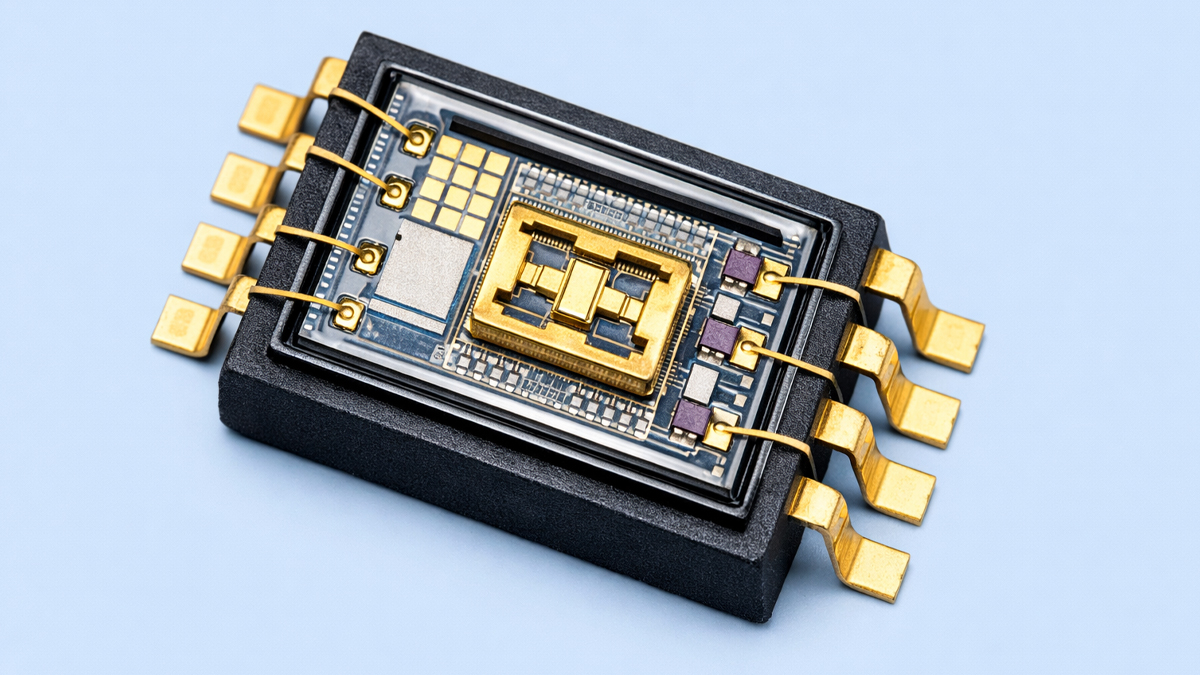
What is MEMS Temperature Sensor?
Basic idea: A MEMS Temperature Sensor is a very small temperature sensing device made with fabrication methods similar to integrated circuit manufacturing. MEMS stands for Micro Electro Mechanical Systems. MEMS devices are built using techniques similar to IC fabrication and combine tiny mechanical structures with analog and digital circuitry. In the case of temperature sensing, the device converts thermal change into an electrical signal that electronics can measure, process, and use for control, protection, calibration, or monitoring.
Context: In practical products, a MEMS temperature sensor may appear as a dedicated miniature sensor, or as an integrated temperature channel inside a larger MEMS device such as an environmental sensor, a pressure sensor, or a motion sensor. For example, the BME280 includes an integrated temperature sensor that is optimized for low noise and high resolution, and the ADXL363 is described as a three sensor combination that includes both a MEMS accelerometer and a temperature sensor. This shows that MEMS temperature sensing is often part of a broader sensing system rather than a standalone part only.
How does MEMS Temperature Sensor Work?
Operating principle: A MEMS Temperature Sensor works by letting a temperature sensitive structure or semiconductor element respond to heat and then translating that response into an electrical output. Depending on the design, the change may appear as a change in resistance, voltage, current, frequency, or infrared energy level. The sensor signal is then conditioned, digitized, and corrected through on chip electronics so that a host processor can read a stable temperature value.
Signal chain: A typical MEMS based temperature path includes the sensing element, an analog front end, an ADC, logic, memory for calibration data, and a digital interface such as I2C or SPI. In the BMP280, the pressure and temperature sensing element feeds an analog front end, ADC, logic, and interface. Oversampling can be used for temperature measurement, which reduces noise and improves output resolution. This is important because raw thermal readings are often small and require careful processing before they become useful engineering data.
System behavior: In many MEMS products, temperature data does more than report ambient conditions. The BME280 temperature output is used for compensation of pressure and humidity sensing, while the ADXL367 can store temperature samples together with motion data. In other words, temperature sensing often supports system accuracy by correcting drift, aligning measurements, or protecting performance over changing operating conditions.
What are the Components of MEMS Temperature Sensor?
Sensing core: The heart of a MEMS Temperature Sensor is the temperature sensitive element. In some products it is a silicon junction or semiconductor structure. In others it is a thermal MEMS structure that reacts to heat flow or infrared radiation. This core is designed to be tiny, stable, and compatible with batch semiconductor manufacturing.
Readout electronics: The next major part is the analog front end and data conversion circuitry. In the BMP280, an analog front end, ADC, logic, and memory work together with the sensing element. These electronics amplify weak signals, filter noise, apply calibration data, and convert the measurement into a digital number that software can use.
Interface and control: Modern MEMS temperature sensors usually include digital communication blocks such as I2C or SPI. The BME280 supports both SPI and I2C interfaces, and the ADXL363 communicates through SPI while the ADXL367 supports SPI and I2C. These interfaces make MEMS devices easy to connect to camera controllers, projector electronics, wireless nodes, and embedded boards.
Packaging and calibration: The final essential components are packaging, power management, and calibration support. Modern digital temperature sensors can operate at very low current and offer high resolution. Compact packages are intended for embedded systems. Good packaging protects the sensor from contamination and mechanical stress, while factory calibration improves accuracy over the operating range.
What are the Types of MEMS Temperature Sensor?
Contact type: One major type is the contact MEMS temperature sensor, which measures the temperature of its own package or the nearby environment through direct thermal coupling. These are used on boards, inside camera bodies, in projectors, and in battery or processor monitoring systems. They are preferred when the goal is to know actual device or ambient temperature rather than surface radiation.
Integrated compensation type: Another important type is the integrated temperature channel inside multi sensor MEMS devices. This can be seen in the BME280 and BMP280, where temperature measurement is closely linked to pressure and humidity processing. In such devices, temperature is not only a user output but also a correction input that improves the accuracy of other sensors.
Companion temperature sensor in motion MEMS: Motion sensors can also include temperature sensing for synchronized environmental awareness and drift handling. The ADXL363 and ADXL367 include on chip temperature sensing alongside MEMS acceleration measurement. This type is useful when one device needs motion and temperature data together with low power consumption.
Digital and analog output type: MEMS temperature sensors may also be grouped by output style. Analog temperature sensors emphasize linearity and low power, while digital temperature sensors offer very low current consumption, up to 12 bit resolution, and fine digitized temperature steps. In system design terms, analog types are simple and fast, while digital types reduce external component count and simplify software integration.
What are the Applications of MEMS Temperature Sensor?
Industrial and consumer electronics: MEMS temperature sensors are used in portable electronics, wearables, smart home devices, industrial monitoring nodes, and embedded controllers. The BME280 is suitable for battery driven devices, and the ADXL367 is positioned for always on sensing and smart home uses. These examples show why MEMS sensors are valuable in compact electronics where space, power, and integration matter.
Environmental and process sensing: In environmental sensing, temperature measurement helps determine ambient conditions and also improves the accuracy of humidity and pressure outputs. The BME280 temperature reading is used for compensation of the pressure and humidity sensors, and the BMP280 can even be configured for use as a temperature sensor when pressure measurement is skipped. This makes MEMS temperature sensing useful in climate monitoring, portable weather tools, HVAC nodes, and device health tracking.
Protection and diagnostics: Another major application is thermal safety. Camera systems, projectors, LEDs, and processors all need temperature awareness to prevent overheating. Camera documentation often warns about high temperature conditions and overheating indication, while projector documentation shows temperature sensing tied to light engine connections and projector condition monitoring. This makes MEMS temperature sensing part of a broader thermal management strategy rather than just a display number on a screen.
What is the Role of MEMS Temperature Sensor in Cinema Industry?
Cinematic electronics role: In the cinema industry, MEMS temperature sensors support the thermal stability of cameras, projectors, lighting electronics, stabilizers, displays, media systems, and supporting control hardware. Their job is not only to measure heat but also to help the equipment maintain image quality, protect components, and sustain reliable operation during long recording sessions or continuous projection. This role becomes especially important because cinema equipment often runs at high data rates, high brightness, and high power for extended periods. Camera and cinema rig documentation also lists strict operating temperature ranges in many systems.
Camera protection: In cinema cameras, thermal sensing helps monitor internal heat buildup around processing boards, batteries, memory subsystems, and image pipelines. Camera bodies and batteries can become warm, and many professional cameras include overheating warnings. Some advanced cinema systems also show camera status views that include temperature and logic board temperature reporting. Taken together, these examples indicate that temperature monitoring is a normal and necessary part of professional camera design.
Projection stability: In cinema projection systems, temperature sensing is closely linked to the health of the light source, airflow path, and aging behavior of the projector. Temperature sensor connections are often included in the LED or light engine section, and projector sensors can detect ambient temperature and humidity because they strongly affect projector aging. This shows that temperature sensing is part of predictive maintenance, brightness stability, and service planning in cinema environments.
Performance accuracy: MEMS temperature sensors also play an indirect but crucial role by compensating other sensors and subsystems used in cinematic electronics. Temperature can be used to correct pressure and humidity sensing, while motion devices can integrate temperature sensing together with acceleration measurement. By inference, this kind of temperature awareness supports more stable behavior in camera motion units, gimbals, environmental modules, and intelligent monitoring hardware that may be built into cinema tools and support rigs.
What are the Objectives of MEMS Temperature Sensor?
Measurement objective: The first objective of a MEMS Temperature Sensor is to provide accurate and repeatable temperature information in a very small footprint. Because these sensors are fabricated with IC style processes, designers can place thermal intelligence close to the part of the system that matters, whether that is a lens block, a control board, a projector light engine, or a compact battery driven module.
Control objective: A second objective is to support control decisions. Temperature data can trigger fan control, reduce performance before damage occurs, improve calibration, or inform system shutdown. The presence of thermal monitoring in cameras and projector management systems shows that real equipment depends on temperature information for safe operation and maintenance planning.
Integration objective: A third objective is to reduce size, wiring, power consumption, and component count. Very low current digital temperature sensing, compact packages, and integrated interfaces all support this goal. The objective is to deliver useful temperature awareness without adding large discrete assemblies.
What are the Benefits of MEMS Temperature Sensor?
Miniaturization benefit: One of the biggest benefits is size. MEMS technology allows temperature sensing to fit inside very compact systems. Tiny packages help designers place sensors closer to heat sensitive zones inside portable or crowded electronics.
Efficiency benefit: Another benefit is low power operation. Digital temperature sensors can operate at very low currents, and advanced integrated motion and temperature platforms are built for ultra low power use. This is extremely valuable in battery powered accessories, wireless monitoring nodes, compact cinema rigs, and always on diagnostic systems.
System level benefit: MEMS temperature sensors improve reliability, calibration quality, and protection. Temperature data can be used for compensation, while thermal monitoring in cameras and projectors helps prevent heat related problems and track equipment health. The result is longer component life, better measurement consistency, and fewer unexpected interruptions during recording or projection.
What are the Features of MEMS Temperature Sensor?
Electrical and digital features: Common features include low power consumption, digital interfaces, programmable sampling, oversampling, and compact packaging. I2C and SPI connectivity are common, and selectable oversampling can be used for temperature measurement. These features help designers balance noise, speed, and power use.
Accuracy related features: Digital temperature sensors often provide fine temperature digitization, while analog parts can provide strong linearity and high accuracy across wide operating ranges. Some integrated temperature sensors are optimized for low noise and high resolution. Together, these features show that modern MEMS temperature sensing focuses on usable accuracy, not just raw miniaturization.
System features: Integrated FIFO storage, synchronized sampling, and shared sensing platforms are also important. Some motion and environmental MEMS devices can combine temperature information with other sensor outputs in a single device. For embedded electronics, this reduces design complexity and makes data handling more efficient.
What are the Examples of MEMS Temperature Sensor?
Environmental sensor example: Bosch BME280 is a clear example because it combines humidity, pressure, and temperature sensing in one compact package. The integrated temperature sensor is optimized for low noise and high resolution and is used for compensation of the other sensing channels as well as ambient temperature estimation.
Pressure sensor example: Bosch BMP280 is another strong example. It includes a pressure and temperature sensing element, selectable temperature oversampling, and can be used as a temperature sensor when pressure measurement is skipped. This makes it a useful illustration of how MEMS platforms can emphasize temperature as either a primary or secondary output.
Motion sensor example: Analog Devices ADXL363 is a MEMS accelerometer platform that also includes a temperature sensor and an onboard ADC. It is a good example of a multi function MEMS device where temperature data supports low power synchronized sensing.
Advanced low power example: Analog Devices ADXL367 also includes an on chip micropower temperature sensor, along with digital interfaces and very low power operation. It represents a newer style of integrated MEMS sensing where motion and temperature data can be handled together in always on embedded systems.
What is the Definition of MEMS Temperature Sensor?
Formal definition: A MEMS Temperature Sensor is a miniature temperature sensing device manufactured with microfabrication techniques similar to integrated circuit processing, in which a temperature sensitive element and supporting electronics work together to detect thermal change and convert it into a usable electrical output for measurement, compensation, protection, or control.
What is the Meaning of MEMS Temperature Sensor?
Practical meaning: The meaning of MEMS Temperature Sensor is simple. It refers to a tiny smart heat sensing device that can fit inside modern electronics and continuously tell the system how hot or cool it is. In real products, this information helps devices stay accurate, safe, power efficient, and reliable. That is why MEMS temperature sensing is important in everything from environmental modules to cinema cameras and projectors.
What is the Future of MEMS Temperature Sensor?
Technology direction: The future of MEMS Temperature Sensor is likely to center on deeper integration, lower power, better calibration, and smarter system level use. Current products already point in this direction. Very low current digital temperature sensing, ultra low power integrated motion and temperature platforms, and multi function environmental sensing with temperature based compensation all suggest that future MEMS temperature sensors will become even more embedded inside larger sensing and control systems.
Cinema direction: In cinematic electronics, future MEMS temperature sensing will likely become more predictive and more distributed. Projector platforms already track environmental conditions and health notifications, and professional cameras already expose temperature status and overheating behavior. The next step is broader use of thermal data for predictive maintenance, automatic performance tuning, smarter fan and power strategies, and more stable long duration recording and projection workflows.
Design direction: Another likely future trend is combining temperature data with motion, pressure, humidity, timing, and AI driven diagnostics. Because MEMS devices are built with scalable semiconductor style processes, it becomes practical to add more sensing intelligence in less space. For cinema industry equipment, this means better protected electronics, more reliable field operation, and finer thermal control without making cameras, stabilizers, or projection hardware larger and heavier.
Summary.
- A MEMS Temperature Sensor is a miniature temperature sensing device built with semiconductor style microfabrication and supporting electronics for measurement and control.
- It works by turning thermal change into an electrical signal, then conditioning, digitizing, and calibrating that signal for system use.
- Its main components usually include a sensing element, analog front end, ADC, logic, memory, package, and digital interface.
- Common types include contact temperature sensors, integrated compensation sensors, motion plus temperature combo sensors, and digital or analog output versions.
- Important examples include Bosch BME280, Bosch BMP280, Analog Devices ADXL363, and Analog Devices ADXL367.
- In the cinema industry, MEMS temperature sensors help cameras, projectors, and related electronics maintain safety, stability, and long operating life.
- Their key objectives are accurate measurement, thermal protection, calibration support, and compact low power integration.
- Their future points toward lower power, tighter sensor fusion, predictive maintenance, and smarter thermal management in advanced cinematic electronics.

